
rotary die cutting machine drum

How to Choose a Rotary Die Board Making Machine: Laser Cutting vs. CNC Router

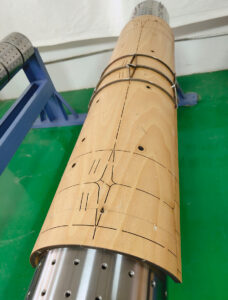
Advanced technology improves the operating experience and saves the time and labor cost. In the die-making industry, rotary machines are widely used in making corrugated paper dies. Mechanically, rotary die has much higher efficiency than flatbed die, which is the reason that most corrugated paper factories choose them. In the market, there are two kinds of rotary machines, rotary laser machines and CNC rotary routers. We do need to think twice before purchase. CNC Rotary Router CNC Rotary Die Board Milling Cutting Machine use milling knives to cut the kerf of rotary die boards. With stable body structure design, flexible working function, professional CNC control system, the cutting efficiency and quality has more advantages over traditional cutting method. Our YTR8 CNC rotary router can cut 0.6-1.0meter plywood in one minute, which is a fast cutting speed with great kerf quality. Our machine major components are from very famous industrial suppliers. The servomotor

Read More »
Flat Die

Die Cutting Mold Matching Guide for Corrugated Paper, Cardboard and Electronic Materials

In the packaging and die-cutting industry, reasonable matching of cutting rules, plywood boards and ejection rubber is the key to improving cutting quality, extending mold service life and reducing production costs. Different materials such as corrugated paper, solid cardboard, electronic films and self-adhesive labels require targeted die-cutting solutions with exclusive specifications and tolerance standards. For corrugated paper processing, it is divided into 3-layer, 5-layer and 7-layer structures with various flute types. Common flutes include A, B, C, E and F in descending size. Combined types like AB, BC and BE are the most widely used for 5-layer corrugated boxes, while special combinations such as AA, BB, FF and EE can be customized. Seven-layer corrugated paper mostly adopts ABC and AAA combinations for heavy-duty packaging. The standard blade height for corrugated die cutting is unified at 23.8mm, and 23.6mm blades are rarely used, which belongs to the Japanese industrial standard. The

Read More »
auto bending machine

Still Losing Time on Die Making? The Problem Might NOT Be Your Machine

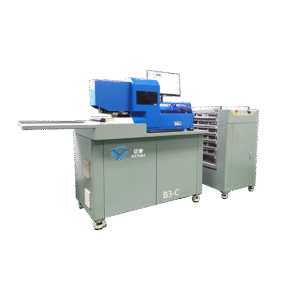
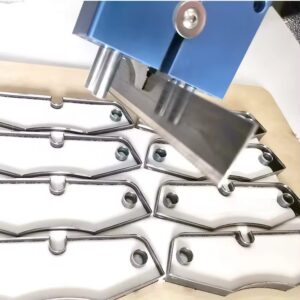
In today’s die cutting industry, speed is everything. But here’s what we often see: Machines are upgraded Orders are increasing Pressure is higher than ever Yet production is still slowing down. Why? Because the bottleneck is no longer the press.It’s your die making process. Problem 1: Slow die preparation = Delayed delivery Short-run jobs mean: Frequent die changes Tight delivery deadlines If your bending process is: Manual Low precision Inconsistent You are losing time on every single order. Solution: Multi-function Bending Machine With a high-precision bending system, you can: Bending / Bridging / Cutting / Notching / Perforating in ONE machine Double screw feeding → higher accuracy Faster setup, less manual adjustment Result: Shorter lead timeStable die qualityHigher output with less labor Problem 2: Stripping not clean? Blame the rubber. Many factories focus on the die…but ignore a key factor: Rubber / Sponge Common issues: Poor rebound → waste not removed

Read More »
Cylinder Drum for Rotary Die

How to Select and Mount Rotary Die Cylinders for Precision Production

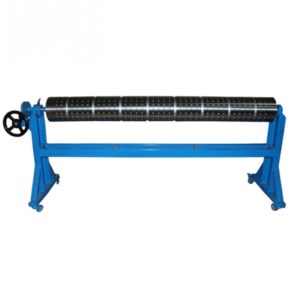
In rotary die-cutting production, the relationship between the cylinder and the die is one of absolute interdependence. The cylinder is not merely a carrier—it is the foundation that determines cutting precision, waste removal efficiency, and overall machine stability. For die-making factories and carton manufacturers, understanding cylinder parameters is essential, but equally critical is mastering the process of mounting cylinder to rule rotary cutting dies correctly. Over my years of managing die-making operations and advising customers on rotary tooling, I have observed that even the most precisely manufactured die will fail to perform if the die-making cylinder it is mounted on is poorly specified or incorrectly prepared. Conversely, a well-matched cylinder and die combination can transform production efficiency, reducing setup time, extending tool life, and delivering consistent cut quality across millions of cycles. This guide covers the essential parameters of mounting rotary die cylinder systems, the precision standards that matter, and

Read More »
Wooden Die Making Workflow

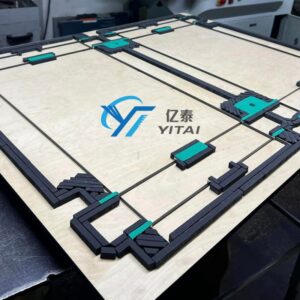
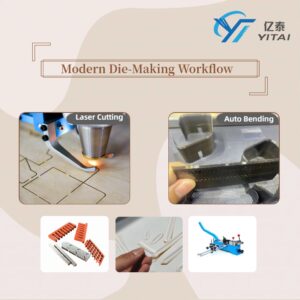
The Modern Die-Making Workflow: How to Make a Cutting Die Board with Laser Cutting and Auto Blade Bending Machines

For decades, the craft of making steel rule dies was defined by manual skill. Master die-makers would spend years honing their ability to saw plywood by hand, bend steel rule with manual benders, and meticulously fit each piece into place. It was—and in many shops still is—a craft that demands patience, precision, and an intimate understanding of material behavior. But the industry has evolved. Today, the demands on die-making shops are greater than ever. Customers expect shorter lead times, tighter tolerances, and more complex geometries. Volume fluctuations require rapid turnarounds. And the margin for error has shrunk to nearly zero. In my years managing die-making operations, I have witnessed this evolution firsthand. The shops that thrive today are those that have successfully integrated automation into their workflows—not to replace skilled craftsmen, but to amplify their capabilities. Two machines have been particularly transformative in this regard: the laser cutting machine for

Read More »
CNC Carpet Digital Cutting Machine

Maximize Your Carpet Cutting Efficiency with CNC Technology

In the carpet manufacturing and floor decoration industry, precision and efficiency are everything. Whether you’re producing custom carpets, handling large-scale home improvement projects, or working in construction, the quality of your cutting process directly impacts your final product—and your bottom line. Traditional manual cutting methods are not only time-consuming but also prone to inconsistency. That’s where CNC carpet cutting machines come in. What Is a CNC Carpet Cutting Machine? A CNC carpet cutting machine is a high-precision device designed specifically for cutting various carpet and floor covering materials. Using computer numerical control (CNC) technology, it automates the cutting process, allowing manufacturers and decorators to cut materials into exact sizes and shapes with minimal waste. These machines are widely used in: Why Choose CNC Over Manual Cutting? The difference between CNC and manual cutting comes down to three key factors: speed, precision, and labor savings. Compared to manual cutting, CNC digital

Read More »
Steel Rule Puller Extractor

The Rule Puller: The Unsung Hero of Every Die-Making Shop Floor

If you have ever spent a full day on a die-making shop floor, you know that the loudest machines—the jig saws, the benders, the cutters —tend to get all the attention. They are the stars of the show, the heavy lifters that visitors marvel at when they tour the facility. But ask any veteran die-maker about the one tool they reach for most often, and I guarantee you will hear a different answer. In my fifteen years managing die-making operations, the tool I have seen in the hands of our senior technicians more than any other—besides a good pair of calipers—is the Rule Puller. It is small. It is simple. It is unassuming. And yet, without it, our production floor would grind to a halt. The rule puller is the tool that bridges the gap between assembly and precision, between a damaged die and a salvaged one, between a time-consuming

Read More »
Manual Bending Machine

What Are The Manual Machines That A Die-making Shop Must Have?

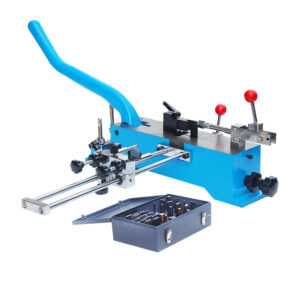
20 years ago, when I first took charge of a die-making workshop, things were very different. CNC automation and laser technology were just starting to become mainstream for high-volume production. Back then — and still true today for many small and medium-sized die-making shops — the real backbone of the workshop was not high-tech robots, but skilled craftsmen working with dependable, purpose-built manual machines. In this industry, many people wrongly believe that manual machines are outdated. But from my years of managing production lines, I can say this is simply not true. Even now, in our own workshop equipped with advanced CNC rotary benders and laser cutters, manual machines still play an essential role. They are the foundation for training new operators, handling small-batch custom jobs, and performing precise finishing work that automation cannot always do efficiently. If you’re planning to open a new die-making shop or upgrade your current

Read More »
Rotary Die

Rotary Dies vs. Flat Dies: Making the Right Choice for Precision and Profitability

Precision Die-Cutting: Rotary vs. Flat Die Selection Essentials In precision die-cutting, neither rotary dies nor flat dies are universally superior—selection hinges on application suitability, not sheer performance. With years of hands-on experience in die manufacturing, misselection causes costly downtime and waste, while optimal choice doubles throughput and cuts material loss. Die makers, converters, and in-house teams must master their operational traits. This article goes beyond basic pros and cons, covering market segmentation, ideal product uses, and the critical role of high-precision machinery for both tooling types. 1. Market Segmentation and Typical Product Applications The first rule of thumb in our factory is simple: let the material and the volume dictate the technology. You cannot force a square peg into a round hole, and similarly, you cannot expect flatbed tooling to efficiently process high-speed roll stock without sacrificing speed. Rotary Dies: The Kings of High-Speed Continuous Production Rotary dies are engineered

Read More »

YITAI's Services Always Go Extra Mile

1 to 1 consulting service, hand in hand to creat brilliance, our products have been exported to North America,South Asia,Australia,South America,Africa and other regions and we also have many distributors and partners in overseas

We are here to help you !

Tell Us your needs, provide the drawings or share your idea with your requirements. Our experts will give you a reply within 24 hours

Contact to Quote

Our team of experts is ready to assist you with everything from product inquiries to technical support.