
Rotary Die

Rotary Dies vs. Flat Dies: Making the Right Choice for Precision and Profitability

Precision Die-Cutting: Rotary vs. Flat Die Selection Essentials In precision die-cutting, neither rotary dies nor flat dies are universally superior—selection hinges on application suitability, not sheer performance. With years of hands-on experience in die manufacturing, misselection causes costly downtime and waste, while optimal choice doubles throughput and cuts material loss. Die makers, converters, and in-house teams must master their operational traits. This article goes beyond basic pros and cons, covering market segmentation, ideal product uses, and the critical role of high-precision machinery for both tooling types. 1. Market Segmentation and Typical Product Applications The first rule of thumb in our factory is simple: let the material and the volume dictate the technology. You cannot force a square peg into a round hole, and similarly, you cannot expect flatbed tooling to efficiently process high-speed roll stock without sacrificing speed. Rotary Dies: The Kings of High-Speed Continuous Production Rotary dies are engineered
Read More »
Rotary plywood for die making and packaging industry

Plywood Die Board Selection Guide: Choose the Right Material for Long-Lasting Dies | YITAI

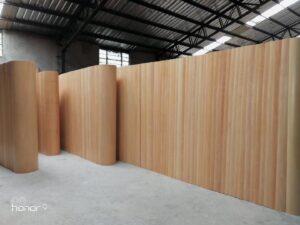
Introduction: The Unsung Hero of Precision Die-Cutting Every high-quality cutting die begins with a single, often overlooked component: the plywood die board. This wooden foundation—whether flat or rotary—serves as the precise housing for steel rule blades, determining how accurately those blades maintain their position through thousands or even millions of cutting cycles . At YITAI, with over 40 years of die-making expertise and serving customers in more than 100 countries, we understand that the plywood board is not merely a consumable—it is the structural backbone of your die. A warped, delaminated, or inconsistently cut board will compromise even the most precisely bent steel rule, leading to poor cut quality, premature blade failure, and costly press downtime . This guide will help die shops and packaging converters understand how to select the optimal die board plywood based on their specific production demands, substrate types, and expected die life. Why Plywood? The

Read More »
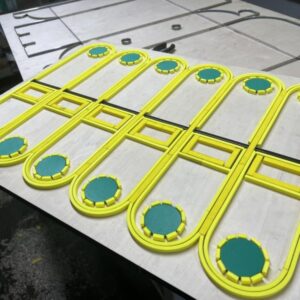
Rotary Die Board Laser Cutting

Choose the Right Solution for Your Rotary Die Shop

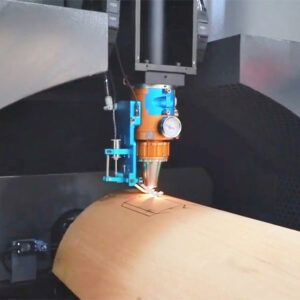
Your Roadmap to Efficient Rotary Die Production: A Guide to Choosing the Right Equipment In the dynamic world of rotary die cutting, the quality and efficiency of your tooling start with your production process. Whether you are a small workshop just starting out or a large-scale industrial die maker, selecting the right equipment for each stage of rotary die manufacturing is critical. This guide breaks down the essential machinery for rotary die production into three core processes, offering options for every scale and budget. Use it to build your ideal workflow. 1. Die Board Cutting: The Foundation of Your Rotary Die The first step in creating a precise rotary die is accurately cutting the groove pattern into the cylindrical wooden die board. Your choice here will define your production speed, precision, and operating costs. Option Technology Best For Key Advantages Option 1: Co2 Rotary Laser Cutting System Laser High-volume, complex

Read More »
Rule Insertion and Assembly

Ultimate Guide to Wooden Die Making for Die Shops

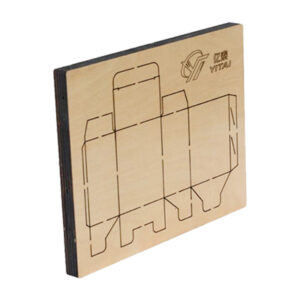
Introduction to Wooden Die Making Wooden die making is the foundation of the packaging and converting industry. For over a century, die shops have relied on precision-crafted wooden dies—also known as steel rule cutting dies mounted in plywood die boards—to cut, crease, and form paperboard, corrugated, and countless other materials into finished products. Whether you’re running a small trade shop or a high-volume packaging operation, understanding the complete wooden die making process helps you produce better dies, troubleshoot problems faster, and make smarter equipment investments. This guide walks you through everything a die shop needs to know about wooden die making: from traditional hand methods to modern CNC workflows, material selection, quality control, and essential equipment. What Is a Wooden Die? A wooden die (or steel rule cutting die) consists of three main components: Component Description Die Board Precision-cut plywood (typically 15mm or 18mm thick birch/beech) that holds everything in

Read More »
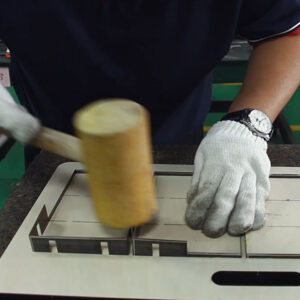
Flat Die- Yitai Die Making

Types of Manual Carton Die Cutting Machines

A Simple Guide for Die Shops For die makers and packaging professionals, manual carton die cutting machines remain practical tools for cutting cardboard, corrugated board, and paperboard. While all are manually operated, each type serves different needs. Here’s what you need to know. Flatbed Die Cutting Machines The workhorse of many die shops. Material sits on a flat surface while a steel rule cutting die (mounted in a wooden die board) presses down to cut. Pros: Cons: Best for: Custom packaging, sample making, small shops testing new wooden die designs Hand Press Die Cutting Machines Compact lever-operated machines. You manually lower the ram onto the steel rule cutting die and material. Pros: Cons: Best for: Artisans, small print shops, educational use, and wooden die work Rotary Die Cutting Machines A cylindrical die rotates as material feeds through. Continuous action means faster cutting. Pros: Cons: Best for: High-volume labels, boxes, standardized

Read More »
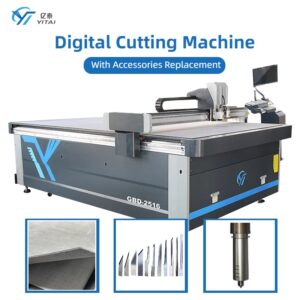
Digital Cutting Machine With Accessories Replacement

Professional Box Sample Cutting Machine Factory

A box sample making machine is an essential tool for packaging manufacturers, carton factories, and design studios. It is used to quickly produce packaging samples before mass production, helping customers check structure, folding, and printing effects. As a professional box sample cutting machine factory, YITAI Precision Machinery provides reliable digital cutting solutions for packaging sample production. What Is a Box Sample Making Machine? A box sample making machine is a digital cutting system designed to produce packaging prototypes without making cutting dies. It can perform multiple processes in one machine: This allows packaging designers and carton factories to create accurate box samples within minutes. Main Advantages of Box Sample Cutting Machines Fast Sample Production Traditional sample making requires manual cutting or die making, which is time-consuming.A box sample cutting machine can produce a prototype in just a few minutes. No Die Required Because the machine cuts directly from digital drawings,

Read More »
Choose the Right Auto Blade Bending Machine for Your Die-Making Business

How to Choose the Right Auto Blade Bending Machine for Your Die-Making Business

An auto blade bending machine has become essential equipment in modern die-making workshops. With higher efficiency, stable accuracy, and lower labor costs, it is widely used for processing cutting rules and creasing rules. However, with many models available on the market, how do you choose the right one for your production needs? Here is a practical guide to help you select the most suitable machine based on product type, production capacity, and precision requirements. 1. Choose Based on the Products You Produce The first and most important factor is the type of cutting dies you manufacture. Ask yourself: Your goal should be to select a machine that: For example: Choosing according to actual production needs ensures better ROI and avoids over-investment. 2. Choose According to Production Volume and Efficiency Needs Production volume directly impacts the type of machine you should select. When output is high and batch sizes are frequent:

Read More »
Plywood die board

Plywood Selection Standards for Die-Making Factories

Quality & Dimensional Criteria Focused on Die Board Performance In die-making production, plywood is not just a panel material — it is the structural foundation of the die board. The stability, cutting accuracy, blade insertion precision, and service life of a die all depend on the quality and dimensional consistency of the plywood. To help die-making factories reduce production risks and improve finished die accuracy, we have summarized practical plywood selection standards specifically tailored to die board applications, focusing on structural integrity, surface quality, and dimensional tolerance control. Quality Requirements for Die Board Applications For die-cutting boards, plywood must withstand laser cutting, rule insertion, repeated pressure, and long-term use without deformation. The following defects are strictly unacceptable: 1. Delamination / Bubbling — Strictly Prohibited Any internal separation will significantly reduce structural strength.In die boards, this may lead to: 2. Core Board Separation — Strictly Prohibited Gaps between core layers cause:

Read More »
YITAI Precision Machinery at WEPACK & SINO FOLDING CARTON 2026 | Booth 4A100

WEPACK & SINO FOLDING CARTON 2026 – Join YITAI Precision Machinery in Shenzhen!

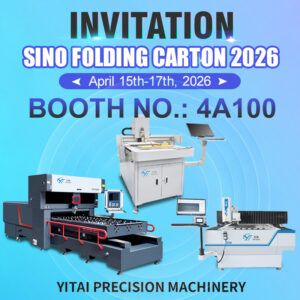
We are excited to announce that YITAI Precision Machinery will be exhibiting at WEPACK & SINO FOLDING CARTON 2026, the premier international exhibition for the packaging and folding carton industry. This highly anticipated event brings together industry leaders, innovators, and professionals from around the globe to explore the latest trends and technologies. Event Details: What to Expect at Our Booth: At Booth 4A100, YITAI will demonstrate our latest precision machinery designed to optimize production processes and deliver superior results. Our product lineup includes: Our team of experts will be on hand to provide live demonstrations, answer your questions, and discuss how YITAI’s technology can help you achieve higher efficiency, quality, and cost savings. Why Visit YITAI? Contact Us: To schedule a meeting or request more information, please contact us via WhatsApp: +86 15806261086 We look forward to welcoming you at Booth 4A100 in Shenzhen! Stay connected with us for more

Read More »

YITAI's Services Always Go Extra Mile

1 to 1 consulting service, hand in hand to creat brilliance, our products have been exported to North America,South Asia,Australia,South America,Africa and other regions and we also have many distributors and partners in overseas

We are here to help you !

Tell Us your needs, provide the drawings or share your idea with your requirements. Our experts will give you a reply within 24 hours

Contact to Quote

Our team of experts is ready to assist you with everything from product inquiries to technical support.