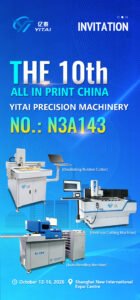
Meet YITAI at All in Print China 2026, Booth N3A143

Meet YITAI at All in Print China 2026, Booth N3A143

YITAI Precision Machinery will exhibit at the 10th All in Print China, held October 12-16, 2026 at the Shanghai New International Expo Centre. Visit us at Booth N3A143 to see our precision cutting and die-making equipment and talk with our team about your production needs. What you will see at Booth N3A143 Onsite service Our engineers will be at the booth throughout the show. If you have a material, part drawing or die type you want to discuss, bring it, or send it before the show so we can prepare. We can talk through cutting results, bending accuracy and whether a machine suits your production. Book a meeting in advance Wanna a set time at the booth? Email sales_diemaking@yitaipacking.com or message us on WhatsApp at +8615806261086 with your name, company and the products you are interested in.
Read More »
small foam rollers

From Prototype to Production: How to Cut Small Foam Rollers and Gaskets Without Tooling Costs

Small foam rollers, gaskets and seals are cut parts with a tiny inner hole, a small outer diameter and a soft, springy material in between. A digital cutting machine can produce these parts directly from a CAD file with no tooling, which makes it a practical way to validate a design before committing to a die. It is not always the right tool for volume production, and for very small holes the result depends on the material, so a test cut is the only reliable answer. This guide explains why small foam parts are difficult to cut, what decides whether a small hole cuts cleanly, and how to move from prototype to production without wasting money on tooling too early. Why Small Foam Parts Are Hard to Cut Foam is not a rigid material. When a blade presses into it, the foam compresses, pushes sideways and then springs back. On

Read More »
Electroplated Surface of Die Cylinder

Custom Rotary Die Mounting Cylinders: Why “One Size Fits All” Doesn’t Work in Rotary Die Making

No Two Rotary Presses Are Exactly Alike Every die shop eventually runs into the same problem: a mounting cylinder that looks right on paper, but doesn’t quite fit once it arrives. The slot position is slightly off, the wall thickness isn’t rigid enough, or the surface starts showing rust within weeks of installation. The root cause is simple — rotary die mounting cylinders aren’t a one-size-fits-all product. Slot position, hole pattern, wall thickness, and mounting method all vary depending on the specific press and workflow they’re built for. A cylinder made to generic specifications, without confirming your actual equipment details, is a common source of fit and performance issues that only show up after installation. What Goes Wrong When a Cylinder Isn’t Built to Spec A handful of recurring issues account for most of the problems die shops run into with mounting cylinders: That last point deserves more attention than

Read More »
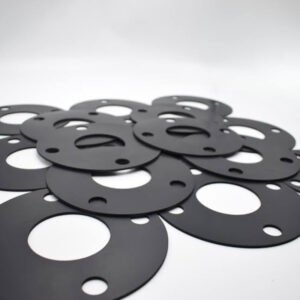
Rubber gasket cutting production

Why Thick Rubber Gasket Cutting Still Fails: Taper, Stopped Production, and What Actually Fixes It

A Familiar Scenario on the Shop Floor A batch of 15mm NBR or EPDM gaskets needs to go out on schedule. The laser cutter fills the shop with smoke and leaves scorched, discolored edges — not acceptable for a sealing application. Switching to a standard digital cutter helps with the smell, but the cut edges come out angled instead of straight, and a large share of the batch fails inspection before it even leaves the shop. As sealing tolerances tighten — especially for buyers in high-labor-cost markets like Korea, Europe, and North America — this kind of inconsistency isn’t just a quality issue anymore. It’s becoming the reason converters lose bids to competitors running more consistent equipment. Three Technical Problems Behind Most Thick Rubber Cutting Failures 1. The “Taper” Problem Once rubber thickness moves past a certain point, a standard oscillating blade often can’t hold a fully vertical path through

Read More »
Thermoforming die

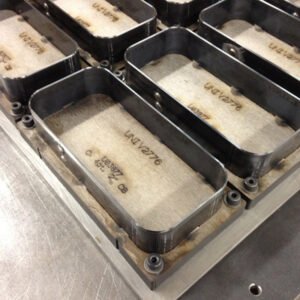
Building Better Thermoforming Dies: Why Welding, Bending, and Rule Selection All Matter

Thermoforming Dies Play by Different Rules Thermoforming and blister packaging dies are held to a higher standard than most other die-cutting applications. The materials involved — PVC, PET, PP, and other plastic films — behave very differently from paperboard or corrugated cardboard, and the end products often go into medical devices, cosmetics, or consumer electronics packaging, where a clean, precise cut isn’t optional. Three problems come up again and again in thermoforming die production: None of these problems trace back to a single cause. They’re the result of three separate stages in die production — bending, welding, and rule selection — each of which needs to be handled correctly for the finished die to perform. Stage 1: Bending — Getting the Shape Right From the Start Thermoforming die shapes are typically more intricate than standard packaging dies, and the bending stage is where that complexity first gets tested. An automatic

Read More »
steel rule laser welding machine

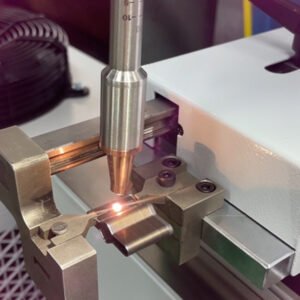
Why Steel Rule Dies Fail at the Weld Joint (And How to Prevent It)

A Familiar Problem in Die Shops A batch of steel rule dies goes out, runs fine for a few weeks, and then breaks — almost always at the same spot: the weld joint. The customer calls in a complaint, the die comes back for emergency repair, and the production line waiting on it sits idle until it’s fixed. If this sounds familiar, the root cause usually isn’t the steel rule itself or how it was installed. It’s the welding process used to join the ends together. What Actually Happens at a Weld Joint When two ends of a steel rule are welded together, the metal at and around the joint goes through a rapid heating and cooling cycle. How that heat is applied — and how much of it spreads beyond the joint — determines whether that weld becomes the strongest point on the blade or the weakest one. A

Read More »
russian ecommerce packing

Digital Sample Cutting Solutions for Russia’s Growing E-Commerce Packaging Market

A Packaging Industry Under Pressure to Move Faster Russia’s e-commerce sector has been expanding at a remarkable pace — online retail turnover jumped roughly 45% in a single year, pushing corrugated box orders sharply higher as brands scramble to keep up with shipping volumes. For packaging converters and corrugated manufacturers, this growth is good news, but it comes with a catch: brand owners now expect custom packaging designs to be developed and approved faster than ever, with shorter runs and more frequent SKU changes. Traditional sample-making — cutting prototypes by hand or waiting on tooling — simply wasn’t built for this pace. When a customer needs to see three box variations before Friday, a process that takes days no longer works. Sourcing Equipment in a Shifting Supply Landscape At the same time, packaging manufacturers across Russia are navigating a broader shift in how equipment gets sourced. Many converters are diversifying

Read More »
yitai Egypt exhibition

See You in Cairo: YITAI Exhibits at the 18th PRINT2PACK & Paper Middle East 2026

YITAI Precision Machinery is heading to Cairo for the 18th International Exhibition for Paper, Paperboard, Tissue, Printing, Packaging and Converting Industry (PRINT2PACK & Paper Middle East 2026), taking place September 15–17, 2026 at the Egypt International Exhibition Center. Visit us at Booth HALL2 2E2 to see our equipment up close and speak with our team about your production needs. GBD-2516 Digital Cutting Machine — Live On-Site We’ll be running live demonstrations of our GBD-2516 Corrugated Cardboard Box Digital Cutting Machine throughout the show, cutting real samples on the spot. This die-free CNC knife cutting machine is built for packaging sample making — corrugated cardboard, honeycomb board, gray board, and printed cardboard — with no mold required. Key specs include: While our deepest expertise is in packaging materials — corrugated cardboard, gray board, composite paper — the machine also handles a wide range of other materials, and our team is happy

Read More »
nomex digital cutting

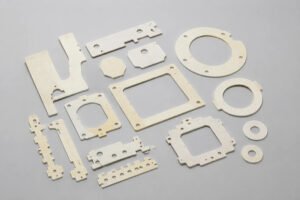
Digital Cutting Solutions for Central America’s Electronics Manufacturing Hub: Precision Washers, Gaskets & Insulation Parts

A Manufacturing Region on the Rise North America’s electronics supply chain is being redrawn. Nearshoring — moving production closer to the US market instead of relying on distant offshore hubs — has become a structural shift rather than a passing trend, and electronics manufacturing is one of its most active sectors. Mexico sits at the center of this shift. The country’s electronics manufacturing services market was valued at roughly $17.18 billion in 2025 and is projected to keep growing toward $22 billion by 2031. Jalisco alone is now home to more than 600 electronics companies, and global names like Foxconn, LG, Samsung, and Flex have all built out electronics operations in the country. Central American economies are carving out a complementary role in this same supply chain realignment. Countries such as Honduras have positioned themselves as nearshoring destinations in sectors where Mexico’s costs or capacity constraints create room for growth.

Read More »

YITAI's Services Always Go Extra Mile

1 to 1 consulting service, hand in hand to creat brilliance, our products have been exported to North America,South Asia,Australia,South America,Africa and other regions and we also have many distributors and partners in overseas

We are here to help you !

Tell Us your needs, provide the drawings or share your idea with your requirements. Our experts will give you a reply within 24 hours

Contact to Quote

Our team of experts is ready to assist you with everything from product inquiries to technical support.