Sample Cutter

The Quote That Almost Killed a Packaging Order— And the Machine That Saved It

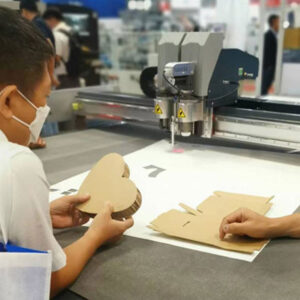
A packaging converter in Southeast Asia gets a call from a new client: a beverage brandneeds 30 custom gift box samples, in five different structural designs, ready for reviewin three days. It’s a common ask — and normally, a nightmare to fulfill. The converter’s old workflow looked like this: send the design to the die shop, wait forsteel rule dies to be made, then run samples. Even on a rush order, that’s 2-3 days justfor tooling — before a single sample gets cut. By the time the dies were ready, theclient’s deadline would already be gone. This scenario plays out every week across packaging workshops worldwide. And it’sexactly why more converters — from Jakarta to Ho Chi Minh City to Dubai — arerethinking how they approach sample production. The Old Standard: Excellent, But Out of Reach for Many For years, the answer to “we need precision digital cutting” has been
Read More »
rotary crease rule

Why Your Corrugated Boxes Keep Cracking at the Folds—And How the Right Creasing Rule Fixes It

For corrugated box manufacturers and rotary die-cutters, few issues cause more customer disputes than crease cracking (liner splitting) and springback (poor flap closure). When a brand owner or packaging client receives a shipment of custom boxes, bad creases project an immediate image of poor quality. In automated packaging lines, springy box flaps can even jam folding-gluing machinery, leading to rejected shipments and costly compensation claims. Many plant managers assume that cracking is caused by poor paper grade or improper cylinder pressure. However, the root cause usually lies much deeper: using mismatched creasing rules on rotary dies. The Fundamental Problem: One Rule Does Not Fit All Substrates Corrugated board is a multi-layer composite made of outer liners and a wavy fluted medium. Because thickness varies drastically across flute types—and because paper behaves differently along vs. across the flutes—a single creasing rule specification cannot handle every production scenario. When corrugated board is compressed

Read More »
Cut Edges Have Burrs

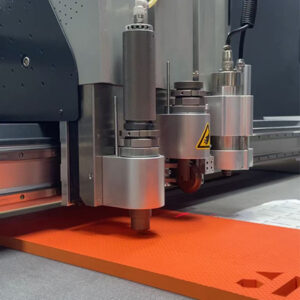
Why Your Sample Cut Edges Have Burrs—and How an Oscillating Knife Fixes It

When sending a packaging prototype to an OEM client, the first thing they evaluate is not just the structural design—it is the finish quality. If the cut edges of your corrugated board, heavy gray board, or honeycomb sheets are rough, frayed, or showing split paper layers, it creates immediate doubt. Clients naturally assume that if your physical prototypes have burrs and crushed flutes, your bulk production quality will be inconsistent. Most packaging manufacturers struggle with rough sample edges. The root cause comes down to the cutting method: traditional drag knives vs. high-frequency oscillating tools. The Root Cause: Drag Knives vs. High-Frequency Oscillating Knives Multi-Tool Versatility: Beyond Just Clean Cutting A clean cut is only the first step. The GBD2516 Corrugated Cardboard Cutting Machine integrates a multi-tool system within a single tool box, allowing structural designers to perform complex processes in a single job file without changing machines: Engineering Power: Designed

Read More »
Manual vs. Pneumatic Steel Rule Puller

Manual vs. Pneumatic Steel Rule Puller: Which Is Better for Your Die Shop?

The Hidden Cost of Rule Extraction in Die Maintenance In die-making and packaging workshops, replacing worn or damaged cutting and creasing rules is a routine but critical task. However, extracting stubborn steel rules—especially thick 3Pt or 4Pt blades deeply embedded in plywood die boards—can easily turn into a bottleneck. Using improper tools like standard pliers or lateral prying bars creates severe operational risks: To solve these challenges, professional die makers rely on specialized tools: Manual Precision Rule Pullers and Pneumatic Rule Pullers. Understanding their technical and operational differences helps workshops choose the right equipment for their production volume. Technical Comparison Matrix The table below outlines the core technical differences between manual and pneumatic extraction technologies: Feature Manual Steel Rule Puller YITAI Pneumatic Steel Rule Puller Power Source Manual leverage (Human effort) Compressed air (Industrial pneumatic cylinder) Pneumatic Components N/A Authentic AIRTAC MBL50 Cylinder & M5C110-06 Valve Pulling Mechanism Vertical mechanical leverage with rubber

Read More »
sample cutting machine

One Cutter, Endless Materials: Master Outer Box & Foam Insert Sampling on a Single Machine

The Packaging Sampling Challenge: Box Shells vs. Protective Inserts In modern packaging production, delivering a complete sample requires more than just a cut cardboard box. High-value electronics, luxury goods, and fragile industrial components demand an integrated packaging solution: a rigid outer shell combined with a custom cushioning insert (EVA foam, sponge, or EPE). Traditionally, packaging plants and die shops had to handle outer box sampling and foam insert cutting separately. This created significant bottlenecks: A Digital Sample Cutting Machine solves this problem by processing both rigid boards and flexible cushioning foams on a single platform with zero die-mold expense (zero tooling cost). Packaging Component Compatible Materials Outer Packaging Shells Corrugated board, Folding carton, Greyboard, Honeycomb paperboard Inner Protective Inserts EVA foam, EPE foam, High-density sponge, Insulation gaskets Key Engineering Tools High-frequency oscillating knife, Drag knife, Smart creasing wheel, V-cut tool Delivery Speed Direct CAD file import (.DXF/.AI/.PDF) to finished physical sample in

Read More »
waterjet cutter head

Vibrating Knife vs. Waterjet Cutter for Sponge & Foam: Which Is Right for Your Die-Making Shop?

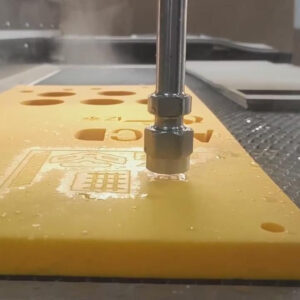
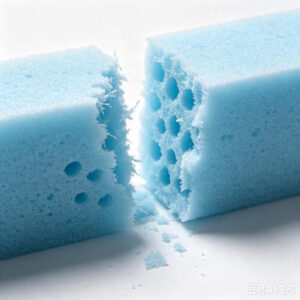
The Sponge Cutting Dilemma in Die-Making & Packaging In modern die-making workshops and foam packaging plants, precisely cutting ejection rubber, EVA foam, sponge, and EPE liners is critical for protecting steel rule dies and delivering flawless packaging inserts. When choosing an automated cutting technology, two dominant methods emerge: Vibrating Knife Digital Cutters and Pure Waterjet Cutters.While both eliminate physical die-molds (No tooling cost), they rely on fundamentally different mechanisms. Understanding their technical differences in speed, accuracy, operating costs, and moisture management is key to selecting the right machine for your factory. Metric Vibrating Knife Cutters Pure Waterjet Cutters Ideal Material Thickness ≤ 40mm Up to 60mm Moisture Impact 100% Dry Process Requires Drying Phase Half-Cutting / Kiss-Cut Fully Supported Not Supported Maintenance cost Blades & Mats Pump Power & Nozzles Technical Differences at Glance Core Technical Differences Breakdown Cutting Speed & Production Efficiency Machining Accuracy & Edge Quality Energy Consumption & Operating

Read More »
Thermal Graphite Sheets

Precision Without Tooling: How Digital Knife Cutters Master Complex Electronics Materials

In the fast-evolving 3C electronics, EV battery, and medical device supply chains, component miniaturization has pushed material tolerances to micro-levels. Modern converters are now required to process a wide variety of flexible non-metallic and composite materials with extreme accuracy. The Precision Bottleneck in Electronics Die-Cutting Complex Electronics Materials: For short-run prototyping and High-Mix, Low-Volume (HMLV) orders, relying on traditional steel rule dies or laser cutting creates massive hurdles: high tooling fees ($100–$500/die), thermal edge-yellowing, and long mold fabrication lead times. To overcome these challenges, precision digital CNC knife cutting systems have become the industry standard for cleanroom-ready electronics prototyping, including our GBD Series cutting machine. In-Depth Breakdown: Master 4 Core Electronic Materials with Zero Molds 1. Thermal Graphite Sheets The Application: Widely used in smartphones, 5G base stations, and EV battery management systems (BMS) for rapid heat dissipation. The Core Processing Pain Points: How GBD System Solves It: 2. Poron

Read More »
mounting cylinder with slots2

Why Do Some Rotary Mounting Cylinders Have Deep Slots? The Key to Fast Die-Locking and Precision Alignment in Corrugated Boxmaking

In the high-speed corrugated packaging industry, machine setup time directly affects your factory profit. If your operators spend 20 to 30 minutes manually aligning and screwing down a rotary die board for every short-run job, your production line is losing money. When you look at modern corrugated rotary die cutters—especially machines built for BOBST and legacy Martin systems—you will see a prominent feature on the cylinder surface: a deep, precision-machined axial slot. This is the aluminum Posilock groove. Why is this deep slot there? Why isn’t the cylinder just a smooth steel drum with standard screw holes? Understanding how a precision Rotary Mounting Cylinder works with this slot is the key to fast die changes, zero-shift registration, and seamless boxmaking. Fast, Screwless Die Mounting: 1:1 Compatibility with the Posilock System The main purpose of this deep slot is to enable screwless, rapid die mounting using the Posilock quick-lock system. Instead

Read More »
Mitsubishi servo motor

Why Drive Systems Matter: How HIWIN Gear Racks and Mitsubishi Servos Redefine Cardboard Cutting Precision

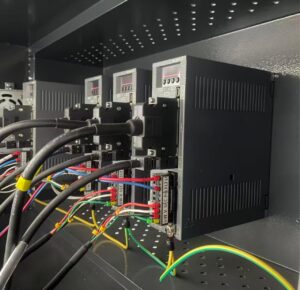
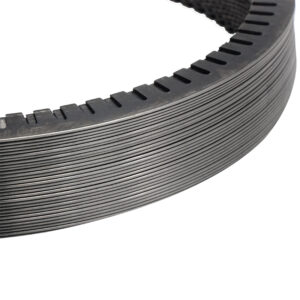
In the packaging and printing industry, a sample cutting machine is often judged by its software or the variety of its cutting heads. While those features are important, they only tell half the story. The real test of a CNC sample cutter happens under the hood. When processing heavy-duty honeycomb board, dense gray board, or thick double-wall corrugated cardboard, the machine’s mechanical drive system is put to the limit. If a cutter relies on cheap, easily stretched belt drives or underpowered stepper motors, you will quickly run into issues: jagged edges, shifting dimensions, and ruined materials. For packaging manufacturers and sample makers managing high-mix, low-volume (HMLV) orders, precision is non-negotiable. Here is a look at the heavy-duty engineering inside the YITAI GBD2516 and how its premium drive systems deliver industrial-grade accuracy. 1. Belt vs. Gear Rack: The Lifespan and Precision Showdown Many entry-level digital cutters on the market use rubber

Read More »

YITAI's Services Always Go Extra Mile

1 to 1 consulting service, hand in hand to creat brilliance, our products have been exported to North America,South Asia,Australia,South America,Africa and other regions and we also have many distributors and partners in overseas

We are here to help you !

Tell Us your needs, provide the drawings or share your idea with your requirements. Our experts will give you a reply within 24 hours

Contact to Quote

Our team of experts is ready to assist you with everything from product inquiries to technical support.