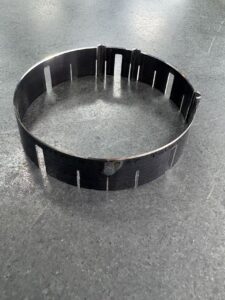
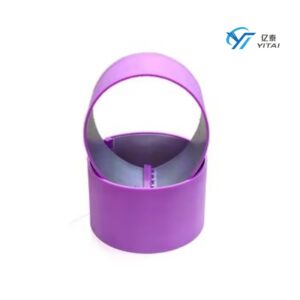
Polyurethane anvil cover

Rotary Die Cutting Optimization: The Guide to Selecting, Measuring, and Maintaining Anvil Covers

In the high-speed world of corrugated box manufacturing, machine uptime is everything. Every minute your rotary die cutter stands idle for maintenance, unscheduled adjustments, or premature part replacement directly eats into your profit margins. At the heart of this production efficiency is a critical yet often overlooked component: the Anvil Cover. Choosing, measuring, and maintaining your anvil covers correctly can make the difference between a clean-cutting, high-yield operation and constant production headaches. This guide compiles practical workshop insights to help your team maximize tool lifespan, improve die-cutting quality, and avoid costly installation errors. 1. Selecting the Right Anvil Cover: Toothed Latch vs. Traditional Bolt Locks When sourcing polyurethane (PU) anvil covers, one of the most critical decisions is the interface design. The locking mechanism directly impacts installation speed, safety, and operational stability. Toothed Latches Toothed latches have rapidly gained dominant market acceptance for several key reasons: Traditional Bolt / Key
Read More »
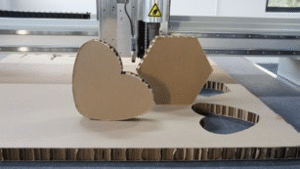
honeycomb board sampling

Need Speed and Flexibility for Short-Run Cutting? Here is the Smart Way to Scale Up

Are you struggling to keep your factory profitable in the era of HMLV (High-Mix, Low-Volume) cutting production? Today, whether you run a packaging design department or a custom die shop, traditional mass production is shrinking. Instead, you are likely facing a flood of HMLV orders—where clients demand 10 different types of packaging or foam inserts, but only want 50 or 100 pieces of each, and they need them delivered tomorrow. Trying to handle HMLV workflows with traditional steel rule dies is a quick way to lose money. Making custom dies for tiny runs takes too long and eats up your profit. This is exactly why a professional Flatbed Digital Cutter is no longer a luxury—it is a survival tool for your shop floor. Many owners switch to digital cutting, only to find their standard single-head machines are still too slow to handle the massive rush of daily HMLV orders. The

Read More »
Cutting Blade for Rotary Die

Why an All-in-One Rotary Rule Processing Machine is a Smart Investment for Your Shop Floor

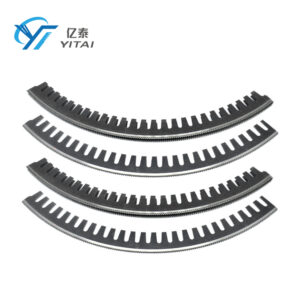
If you run a modern packaging die shop or a corrugated box plant, you already know the drill. Managing rotary dies is an entirely different task compared to standard flatbeds. Every single millimeter matters, and if the blade doesn’t match the exact rule diameter of the curved wooden shell, your high-speed corrugated production line comes to a grinding halt. But let’s be honest about the shop floor reality. Fully automated rotary benders can cost a fortune and require complicated programming. On the other hand, relying entirely on old-school, pure manual hand tools to cut, notch, and guess the curve leads to high scrap rates and massive operator fatigue. That is exactly why we engineered the YITAI YT-Z4 4-in-1 Rotary Rule Processing Machine. It’s not a fully automated computer robot, and it doesn’t try to be. It is a motor-driven, semi-automatic powerhouse that bridges the gap between affordable investment and industrial-grade

Read More »
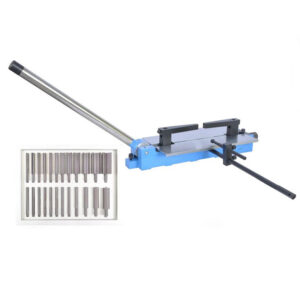
European Type Manual Steel Rule Bender

Conventional Benders vs. European-Type Benders: Why Your Die Shop Needs an Upgrade

 On any professional packaging die shop floor, the manual benders are irreplaceable. It is a tool that demands both physical skill and geometric understanding. Unlike automated bending, manual bending requires the operator to position the rule, select the appropriate die mold, and apply the perfect amount of force to achieve a clean, stress-free bend. However, as modern packaging designs grow more complex and tolerances get tighter, traditional tool limitations become a bottleneck. Many workshops are now facing a critical choice: Should you stick to conventional benders, or upgrade to a European-Type Bender? To help you secure higher-paying packaging orders, let’s explore why the engineering behind your tools determines your final die accuracy. Comparison Feature Conventional Manual Benders YITAI Manual Bender (YTB-07) Mold Support Engineering One-sided or unstable support (prone to tilting under high pressure) Upper & Lower End Support Structure (ensures uniform force distribution) Machine Body Material Conventional Cast Iron (susceptible

Read More »
flat steel rule laser welding

Traditional Welding vs. Laser Welding: Which is Better for Precision Steel Rule Joints in Die Making?

In the packaging and die-making industries, the accuracy of a finished die board depends on the quality of its steel rule joints. Whether you are making folding cartons, pharmaceutical packaging, or corrugated boxes, any blade deformation can cause cutting problems. For many years, die shops have used traditional Gas Shielded Welding ( TIG welding or MIG welding) to join steel rule seams and intersections. However, as packaging factories demand higher precision and faster delivery, traditional welding has become a bottleneck in die blade fabrication. When comparing Traditional Welding vs. Laser Welding for your workshop, which technology is better for precision steel rule joints? Let’s look at the technical facts. The Disadvantages of Traditional Welding on Die Blades Traditional TIG or MIG equipment is cheap, but using it on thin, hardened cutting rules (typically 2pt/3pt, or 0.45 mm to 1.42 mm thick) causes several major problems for die makers: Why Laser Welding is

Read More »
YITAI Precision Machinery APFE 2026

Yitai at Shanghai International Coating & Die-cutting Expo; Film Industry Expo 2026 | Booth 5B181

We are excited to announce that YITAI Precision Machinery will be exhibiting at the 22nd Shanghai International Tape & Film Expo (APFE 2026) from June 24 to 26, 2026. Launched in 2007, APFE has evolved into a world-renowned platform connecting material innovation and application markets. Yitai will show you our cutting equipments and solutions for industry material including leather, fabric, rubber, foam, cardboard, plastic, film, fiber, and composite materials. Event Details: What to Expect at Our Booth: At Booth 5B181, YITAI will demonstrate our latest Sample Cutting Machine and Rubber Cutting Machine. Our team of experts will be on hand to provide live demonstrations and show you how our solutions can help you achieve higher efficiency, quality, and cost savings. Contact Us: To schedule a meeting or request more information, please contact us via WhatsApp: +86 15806261086 We look forward to welcoming you at Booth 5B181 in Shanghai! Stay connected

Read More »
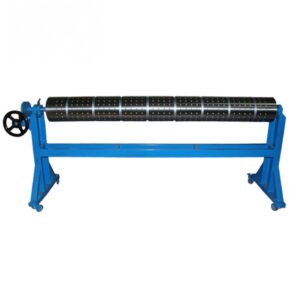
rotary die cutting machine drum

How to Choose a Rotary Die Board Making Machine: Laser Cutting vs. CNC Router

Advanced technology improves the operating experience and saves the time and labor cost. In the die-making industry, rotary machines are widely used in making corrugated paper dies. Mechanically, rotary die has much higher efficiency than flatbed die, which is the reason that most corrugated paper factories choose them. In the market, there are two kinds of rotary machines, rotary laser machines and CNC rotary routers. We do need to think twice before purchase. CNC Rotary Router CNC Rotary Die Board Milling Cutting Machine use milling knives to cut the kerf of rotary die boards. With stable body structure design, flexible working function, professional CNC control system, the cutting efficiency and quality has more advantages over traditional cutting method. Our YTR8 CNC rotary router can cut 0.6-1.0meter plywood in one minute, which is a fast cutting speed with great kerf quality. Our machine major components are from very famous industrial suppliers. The servomotor

Read More »
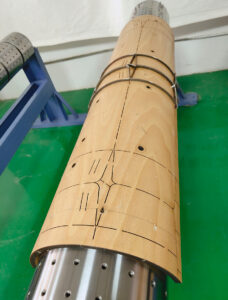
Cylinder Drum for Rotary Die

How to Select and Mount Rotary Die Cylinders for Precision Production

In rotary die-cutting production, the relationship between the cylinder and the die is one of absolute interdependence. The cylinder is not merely a carrier—it is the foundation that determines cutting precision, waste removal efficiency, and overall machine stability. For die-making factories and carton manufacturers, understanding cylinder parameters is essential, but equally critical is mastering the process of mounting cylinder to rule rotary cutting dies correctly. Over my years of managing die-making operations and advising customers on rotary tooling, I have observed that even the most precisely manufactured die will fail to perform if the die-making cylinder it is mounted on is poorly specified or incorrectly prepared. Conversely, a well-matched cylinder and die combination can transform production efficiency, reducing setup time, extending tool life, and delivering consistent cut quality across millions of cycles. This guide covers the essential parameters of mounting rotary die cylinder systems, the precision standards that matter, and

Read More »
Wooden Die Making Workflow

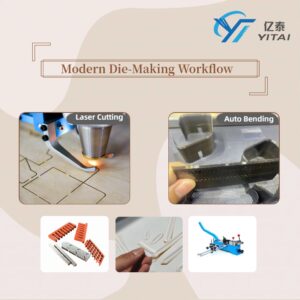
The Modern Die-Making Workflow: How to Make a Cutting Die Board with Laser Cutting and Auto Blade Bending Machines

For decades, the craft of making steel rule dies was defined by manual skill. Master die-makers would spend years honing their ability to saw plywood by hand, bend steel rule with manual benders, and meticulously fit each piece into place. It was—and in many shops still is—a craft that demands patience, precision, and an intimate understanding of material behavior. But the industry has evolved. Today, the demands on die-making shops are greater than ever. Customers expect shorter lead times, tighter tolerances, and more complex geometries. Volume fluctuations require rapid turnarounds. And the margin for error has shrunk to nearly zero. In my years managing die-making operations, I have witnessed this evolution firsthand. The shops that thrive today are those that have successfully integrated automation into their workflows—not to replace skilled craftsmen, but to amplify their capabilities. Two machines have been particularly transformative in this regard: the laser cutting machine for

Read More »

YITAI's Services Always Go Extra Mile

1 to 1 consulting service, hand in hand to creat brilliance, our products have been exported to North America,South Asia,Australia,South America,Africa and other regions and we also have many distributors and partners in overseas

We are here to help you !

Tell Us your needs, provide the drawings or share your idea with your requirements. Our experts will give you a reply within 24 hours

Contact to Quote

Our team of experts is ready to assist you with everything from product inquiries to technical support.