What Is a CNC Rotary Die Board Router?
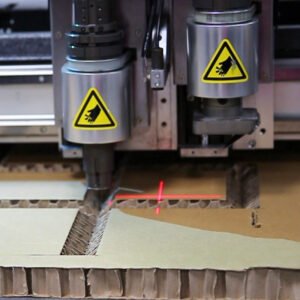
A CNC rotary die board router is a machine used to mill precision grooves and rule-installation holes into cylindrical plywood boards, creating the base structure for rotary steel rule dies used in die-cutting, corrugated box making, label converting, and packaging production. Unlike laser cutting, which burns through the board, a CNC rotary router physically mills the material using a rotating cutting tool — similar in principle to a CNC engraving machine, but purpose-built for round die boards.
If your business currently relies on hand-cutting or an aging laser system to make rotary dies, this machine may be worth understanding — even if you’ve never seen one in operation before.
Do I need a rotary die board router if I already have a laser cutter?
If you are only making flat dies, you likely don’t. But if your production involves rotary die-cutting (common in label printing, folding carton, and high-speed corrugated packaging), you need a way to cut the cylindrical die board that wraps around a rotary cutting cylinder. This can be done by hand, by laser, or by CNC milling — each with very different cost and quality tradeoffs.
What’s the difference between rotary and flat die boards?
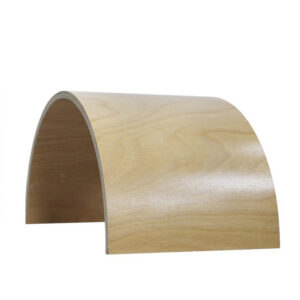
A flat die board is used on flatbed die-cutting presses and is processed as a flat sheet. A rotary die board is curved to wrap around a cylinder and is used on rotary die-cutting presses, which run at much higher speeds — common in high-volume corrugated and label production. Because the board is curved and continuous, machining it accurately requires equipment specifically designed for rotary geometry.
Who typically buys this type of machine?
Three groups most commonly invest in a CNC rotary router:
- Die shops currently using laser cutting who want to lower running costs
- Converters or packaging manufacturers setting up in-house rotary die production for the first time
- Distributors or trading companies looking to add rotary die-making capability to their equipment offering
Core Advantages Over Laser Cutting
Lower Operating Cost Compared to Laser Cutting
Laser cutting rotary die boards requires compressed air as an ongoing consumable, along with regular replacement of laser tubes, lenses, and mirrors. A CNC rotary router eliminates the need for compressed gas entirely — the only consumable is the milling cutter itself, which is far cheaper to replace than laser optics. Over months of continuous production, this difference adds up to a meaningfully lower cost per board.
No Carbonization, Better Rule Retention
Laser cutting works by burning through the plywood, which leaves a thin layer of carbonized material along the cut edge. This carbonization weakens the board’s grip on the installed steel rule, which can lead to rule loosening over time — especially under the vibration and pressure of high-speed rotary production. CNC milling produces a clean-cut edge with no burning, resulting in stronger, more consistent rule-holding strength.
One-Time Programming, Reduced Skilled-Labor Dependency
The full cutting process — including grooving and drilling of rule-installation holes — is completed in a single programmed cycle. This reduces the amount of manual intervention and operator skill required compared to hand-cutting, which is a meaningful advantage for die shops facing rising labor costs or difficulty finding experienced die makers.
Cleaner, More Sustainable Production
Milling generates minimal smoke and residue compared to laser cutting, making it a more suitable process for shops that want to reduce fumes and airborne particulates on the production floor.
Consistent Precision at Scale
CNC control maintains consistent groove depth and contour accuracy across every board, which matters most for shops that are scaling up production and can no longer tolerate the batch-to-batch variation typical of manual cutting.
Cost Comparison: Laser Cutting vs. CNC Rotary Milling
| Factor | Laser Cutting | CNC Rotary Milling |
| Ongoing consumables | Compressed air, laser tubes/lenses | Milling cutter only |
| Cut edge quality | Carbonized edge, weaker rule grip | Clean edge, stronger rule grip |
| Smoke/residue | Higher | Minimal |
| Skill dependency | Moderate | Lower (one-time programming) |
| Best suited for | Flat & rotary combo operations, thin materials | Dedicated rotary die production, cost-conscious scaling |
When evaluating total cost of ownership rather than just the upfront machine price, CNC milling typically shows its advantage over months of continuous use rather than on day one.
A Practical Example: YITAI YTR8 CNC Rotary Router
To make this more concrete, here’s how one CNC rotary die board router — the YITAI YTR8 — is specified:
- Max rotary board size: Diameter 170–800 mm × Length 3000 mm
- Cutting speed: 0.6–1.0 m/min
- Accuracy: 0.05 mm
- Material compatibility: 13–15 mm birch/beech plywood
- Power consumption: 3.5 kW
- CE-certified
The machine mills the full rotary board — including automatic drilling of rule-installation holes — in a single programmed cycle, and is positioned as a direct alternative to laser cutting for shops looking to reduce long-term operating costs without sacrificing precision.
Is This Machine Right for Your Business?
This type of equipment tends to make the most sense if you fall into one of these situations:
- You’re currently laser-cutting rotary dies and want to understand whether the switch to milling would lower your monthly operating costs
- You’re setting up a new rotary die production line and are comparing equipment options from scratch
- You’re a converter or distributor exploring in-house die-making capability instead of outsourcing
- Your current process depends heavily on a small number of experienced die makers, and you’re looking to reduce that dependency
If none of these apply — for example, if your production is exclusively flat-die based — a rotary router likely isn’t the right investment for now.
Frequently Asked Questions
Is CNC milling as precise as laser cutting for rotary dies?
Yes. Modern CNC rotary routers achieve accuracy down to 0.05 mm, which is well within the tolerance required for rotary die production.
What board material does a CNC rotary router work with?
Typically birch or beech plywood in the 13–15 mm thickness range, which is standard for rotary die boards.
How long does it take to cut one board?
This depends on board size and complexity, but typical cutting speeds run 0.6–1.0 m/min, with the full process — grooving and hole drilling — completed in one programmed cycle.
Does switching from laser to CNC milling require retraining staff?
Minimal retraining is typically needed, since the CNC programming workflow is comparable to other CNC equipment. Suppliers offering English-language manuals, training videos, and remote or on-site support can significantly shorten the learning curve.
Interested in seeing how a CNC rotary router compares to your current rotary die-cutting setup? Get in touch for a free consultation based on your board size, material, and production volume.