400 600w Die Board Laser

Common Problems and Solutions for Die Board Laser Cutting Machine

Common Problems and Solutions for Die Board Laser Cutting Machine For many die making factories, the die board laser cutting machine has become an essential production tool. Whether you are using a 400W or 600W plywood laser cutter, stable cutting performance directly affects: However, during daily operation, some common issues may occur. Most of them are not serious machine failures, but parameter, maintenance, or environmental problems. This guide summarizes practical troubleshooting experience for wooden die laser machine users. 1. Slot Width Too Wide or Too Narrow Symptom: The knife slot is either too tight or too loose. Cause: Incorrect focus height of the die board laser cutting machine. Solution: Correct focusing ensures stable and uniform slot width. 2. Bottom Slot (Reverse Knife) Too Large or Too Small Symptom: The bottom of the slot is inconsistent. Cause: Improper power and speed settings. Adjustment Rule: Optimize parameters layer by layer in the


Read More »
Automatic Blade Bending Machine

Safety and Operation Guide for Auto Bending Machine

Practical Precautions for Automatic Steel Rule Bender Users In die making factories, the auto bending machine (also known as auto bender, automatic steel rule bender, or auto blade bending machine) plays a critical role in ensuring rule accuracy and production efficiency. Proper operation of a steel rule bending machine not only guarantees bending precision but also prevents accidents and extends equipment lifespan. Below are important precautions every operator should follow. 1. Safe Operation Comes First When operating an automatic steel rule bender: Even though an auto blade bending machine is highly automated, incorrect handling can still cause injury. 2. Inspect the Steel Rule Bending Machine Before Use Before starting production: Routine inspection prevents unexpected downtime. 3. Prepare Steel Rule Material Properly Before loading steel rules into the auto bender: Improper material preparation can affect bending accuracy and damage the steel rule bending machine. 4. Adjust Parameters According to Production Requirements

Read More »
Yitai 2026 Spring Festival Notice

Spring Festival 2026 Holiday Schedule – Global Notice

In celebration of the 2026 Chinese New Year (Spring Festival), our company will observe a holiday break from February 12 to February 23, 2026. Normal operations will resume on February 24, 2026. As we serve customers worldwide in die making machinery, die cutting equipment, and related consumables, please kindly note: We sincerely appreciate your understanding and continued support. The Spring Festival represents renewal and new beginnings, and we look forward to stronger cooperation with our global partners in 2026. We wish you a prosperous and successful year ahead. YITAI Precision MachineryYour Trusted Partner in Die Making Solutions

Read More »
Manual Die Cutting vs Laser Die Cutting

Manual Die Cutting vs Laser Die Cutting

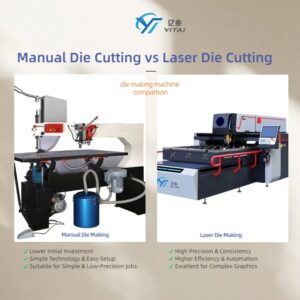
Manual Die Cutting vs Laser Die Cutting 12 Frequently Asked Questions Die-making Manufacturers Ask Before Upgrading In die-making production, many factory owners search online with questions like: If you are considering equipment upgrades, this FAQ guide will help you understand the key differences from a practical production perspective. Essential Products for Manual Die-Cutting Factories Q1: What is manual die cutting? Manual die cutting (also called sawing machine die processing) uses: It is a traditional mechanical method for cutting die boards. This process relies heavily on operator experience and manual precision. Manual Die-Cutting Equipment for Rotary Die Shop Q2: What is laser die cutting? Laser die cutting uses: It is a non-contact, high-precision digital process that replaces manual sawing with laser ablation. Q3: Which method is more accurate? Laser die cutting is significantly more precise. For complex die boards or high-precision packaging, laser cutting provides much better repeatability. Q4: Is laser

Read More »
Mirror Cutting Rule

Mirror Cutting Rule

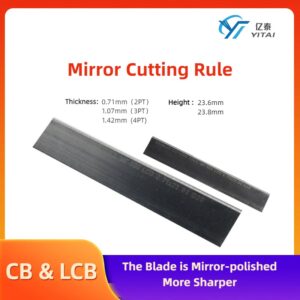
High-Precision Steel Rule for Clean & Burr-Free Die-Cutting In precision die-cutting applications, cutting quality directly determines product appearance and production stability.The Mirror Cutting Rule is specially developed for industries that require ultra-clean cut edges, minimal friction, and high dimensional accuracy. Through advanced mirror polishing technology, the cutting edge achieves superior sharpness and smoothness, making it ideal for high-end and delicate material processing. Specifications Parameter Specification Thickness 0.71 mm (2PT) / 1.07 mm (3PT) / 1.42 mm (4PT) Height 23.6 mm / 23.8 mm Edge Angle 42° / 52° Edge Hardness HS76 / HS80 Body Hardness HS48 / HS50 / HS52 Key Features Mirror-Polished Cutting Edge The blade edge is processed with precision mirror grinding technology, resulting in: This significantly improves cut quality, especially for coated or laminated materials. Lower Friction & Enhanced Surface Finish Due to the ultra-smooth blade surface: This is particularly beneficial when processing sensitive films and high-value

Read More »
Difference Between CNC Router & Laser Cutting Machine

CNC Router vs. Laser Cutting Machine

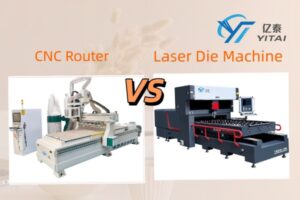
Which One Is Right for Your Plywood Processing Business? When investing in new equipment, many manufacturers ask: “Both CNC routers and laser cutting machines can cut boards — what’s the real difference, and which one should we choose?” This is a critical decision. Although both machines are used for cutting, their working principles, suitable materials, cost structures, and production roles are completely different. Choosing the wrong machine can lead to wasted investment, low productivity, or unnecessary operating costs. Below, we answer the most common customer questions to help you choose the right equipment based on real production needs. Q1: What Is the Fundamental Difference Between a CNC Router and a Laser Cutting Machine? The essential difference lies in the cutting method. CNC Router A CNC router uses a high-speed rotating cutting tool or saw blade to mechanically remove material.This is a contact cutting process with strong mechanical force and stable

Read More »
cigarette packaging cutting die

Manufacturing Process of Sandwich Cutting Dies for Cigarette Packaging

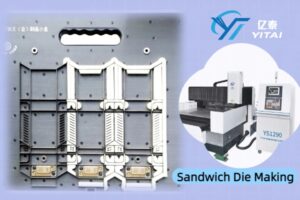
In high-end cigarette packaging, dimensional accuracy, cutting consistency, and long-term stability are non-negotiable requirements. Even minimal deviations can affect carton appearance, machine efficiency, and brand presentation. For this reason, sandwich cutting dies—also known as laminated cutting dies—have become the industry standard for premium cigarette cartons, especially in high-speed, large-volume production environments. Based on practical manufacturing experience, this article explains the structure, material selection, and key manufacturing steps of sandwich cutting dies used in cigarette packaging applications. What Is a Sandwich Cutting Die? A sandwich cutting die adopts a multi-layer laminated structure, typically consisting of: This layered construction forms a rigid “sandwich” system that significantly outperforms conventional single-layer wooden dies in terms of structural stability and dimensional control. Key Advantages for Cigarette Packaging These characteristics make sandwich cutting dies particularly suitable for complex cigarette cartons, foil-laminated boards, and premium printing finishes. Step 1: Structural Design and Engineering The manufacturing process begins

Read More »
Die-Cutting Forms Factory Direct

Why Die-Cutting Foams That Look the Same Perform—and Cost—Very Differently

A Technical Guide for Packaging & Die-Making Professionals In die-cutting operations, stripping foam is a functional component, not a commodity. Although many die-cutting foams appear similar in color, shape, and nominal specifications, experienced die makers know that performance differences become clear once the die enters production. The price gap is rarely visual—it is technical, and it is primarily driven by tolerance control. This article explains what professional buyers, engineers, and production managers should evaluate when selecting die-cutting foam—and why higher-quality foam often delivers a lower total cost of ownership. Industry Perspective: Why Foam Quality Directly Affects Die Performance In high-speed flatbed and rotary die-cutting, stripping foam must perform three critical functions consistently: Foam that fails in any of these areas leads to downtime, rework, and premature die failure—costs that far exceed the initial material price. 1. Raw Material Quality Defines Long-Term Rebound Behavior From a materials engineering standpoint, foam performance

Read More »
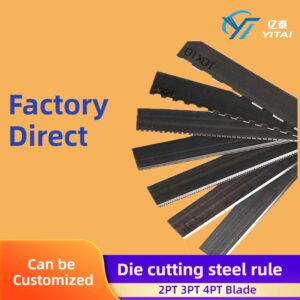
2pt 3pt 4pt Die Cutting Blade

Complete Guide to Major Flatbed Die-Cutting Rule Brands: Models, Performance & Selection

Choosing the right flatbed die-cutting rule is essential for achieving clean cuts, maintaining die life, and maximizing production efficiency. With several leading brands in the market, each offering specialized models for different applications, selecting the best rule can be challenging. This guide provides a detailed comparison of top international die-cutting rule brands, explains key technical features, and offers practical recommendations to help you make an informed choice for your specific die-cutting needs. Comparison of Leading Die-Cutting Rule Brands Below is a detailed overview of major brands, their popular models, specifications, and ideal use cases. Brand (Origin) Model Bevel Type Thickness (mm) Height (mm) Hardness (HRC) Key Features Recommended Applications BOHLER (Germany) Universal Center Bevel (CB) 0.71 / 1.05 / 1.42 22.85 / 23.80 50–52 High hardness, long service life, versatile Greyboard, cardboard, high-speed cutting Masterstrip Side Bevel (SB) 0.71 / 1.07 23.30 / 23.80 54–56 Ultra-precision, sharp edge Electronics packaging,

Read More »

YITAI's Services Always Go Extra Mile

1 to 1 consulting service, hand in hand to creat brilliance, our products have been exported to North America,South Asia,Australia,South America,Africa and other regions and we also have many distributors and partners in overseas

We are here to help you !

Tell Us your needs, provide the drawings or share your idea with your requirements. Our experts will give you a reply within 24 hours

Contact to Quote

Our team of experts is ready to assist you with everything from product inquiries to technical support.