Thermoforming Dies Play by Different Rules
Thermoforming and blister packaging dies are held to a higher standard than most other die-cutting applications. The materials involved — PVC, PET, PP, and other plastic films — behave very differently from paperboard or corrugated cardboard, and the end products often go into medical devices, cosmetics, or consumer electronics packaging, where a clean, precise cut isn’t optional.
Three problems come up again and again in thermoforming die production:
- “Angel hair” — the fine, fuzzy plastic debris left behind when a cutting rule isn’t sharp or precise enough to shear cleanly through the material
- Joint failure — thermoforming dies often have more complex shapes and more weld joints than standard packaging dies, and each joint is a potential weak point
- Bend accuracy — thermoforming die shapes tend to be intricate, and even small deviations in bending precision throw off the final die’s fit and function
None of these problems trace back to a single cause. They’re the result of three separate stages in die production — bending, welding, and rule selection — each of which needs to be handled correctly for the finished die to perform.
Stage 1: Bending — Getting the Shape Right From the Start
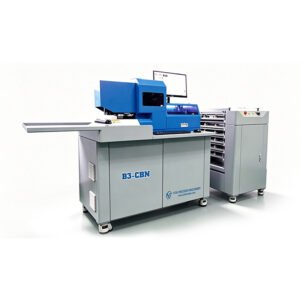
Thermoforming die shapes are typically more intricate than standard packaging dies, and the bending stage is where that complexity first gets tested. An automatic bending machine needs to hold tight tolerances across tighter curves, smaller radii, and more nicking points than a typical flatbed die layout requires.
One detail that matters more in thermoforming than almost anywhere else is “nicking style”. Standard nicking leaves a small bump on the finished package edge after the part is torn away — usually not a problem for general packaging, but a real issue for premium products. Inner nicking hides the connection point inside the part instead, leaving a completely smooth edge after tearing. For cosmetics, medical devices, and other high-end consumer goods, this small detail can be the difference between a product that feels premium and one that doesn’t.
An automatic bending machine built with this kind of application in mind reduces the manual rework needed to get thermoforming-specific details like this right — and does it consistently, batch after batch.
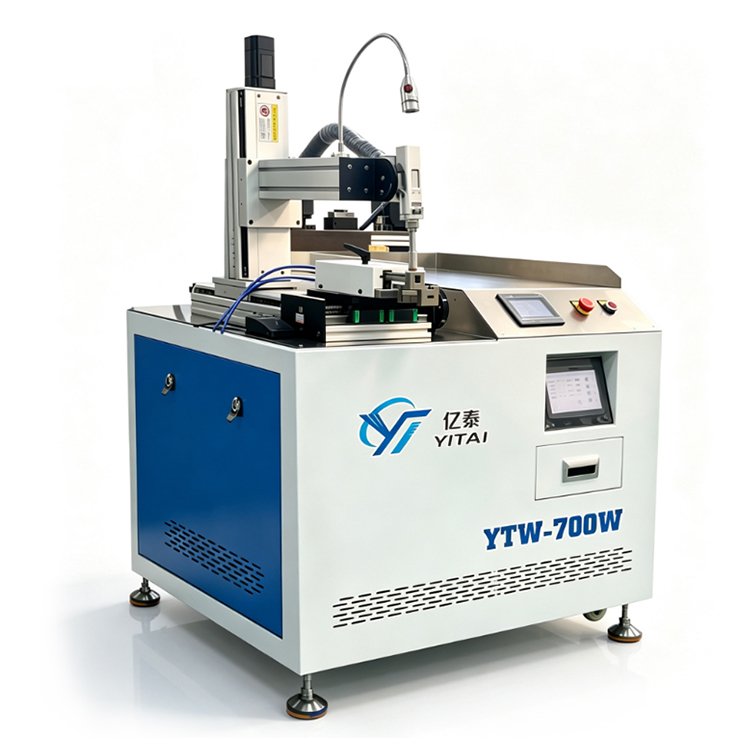
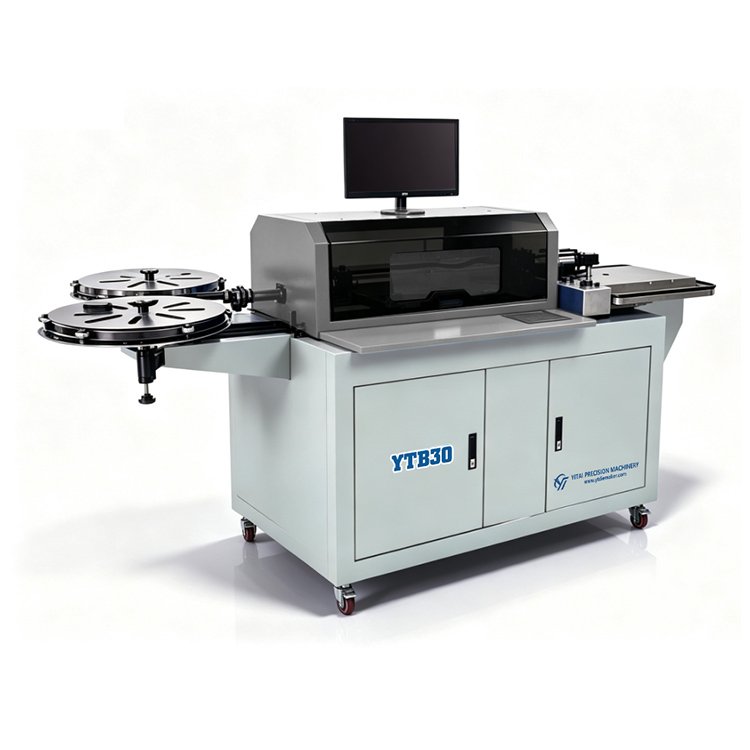
Stage 2: Welding — Where Complex Shapes Meet Their Weakest Point
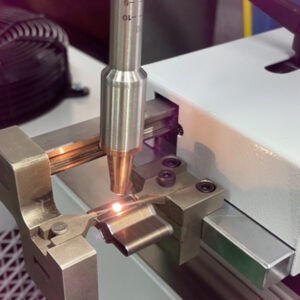
More bends and tighter curves generally mean more weld joints per die, and each one is a place where the finished part can fail if the weld isn’t done right.
The same failure mechanism that affects standard steel rule dies applies here, often more severely: excessive heat during welding weakens the joint, leaving it more brittle and prone to cracking than the rest of the blade. For a thermoforming die with multiple joints packed into a complex shape, one weak weld is often all it takes to send the whole die back for repair.
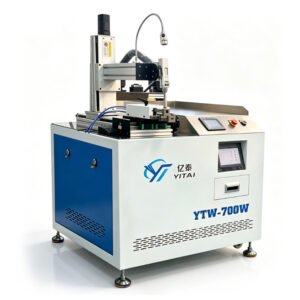
A laser welding machine addresses this directly — concentrated, low-heat welding minimizes the heat-affected zone and thermal distortion that traditional welding methods struggle to control. For thermoforming applications specifically, automatic wire feeding adds another layer of reliability: constant-speed wire fills the weld seam as it’s formed, reinforcing the joint and reducing the risk of small gaps that can turn into failure points down the line — especially valuable when a single die may have a dozen or more welds holding its shape together.
Stage 3: Rule Selection — Solving the Angel Hair Problem
Even a perfectly bent, perfectly welded die will underperform if it’s built with the wrong cutting rule. Standard steel rule, sharpened for paperboard and cardboard, often isn’t fine enough to shear cleanly through plastic film — the result is angel hair: loose plastic fibers clinging to the cut edge, adding a cleanup step to every production run and, in some cases, causing rejected parts.
This is where rule selection becomes a real production variable, not just a spec sheet detail. Two options matter most for thermoforming and blister applications:
- Mirror-polished cutting rules — a highly refined surface finish that reduces friction and material buildup during the cut, helping produce a cleaner edge with less debris
- Fine-ground (honed) cutting rules — a precisely ground bevel and edge geometry designed specifically for cutting plastic film cleanly, without the tearing or fraying that standard rule geometry can cause
Choosing the right rule for the specific plastic material being cut — rather than defaulting to standard steel rule — is often the single biggest factor in whether a thermoforming die produces clean parts or ends up generating angel hair on every run.
Why These Three Stages Need to Work Together
None of these three factors — bending accuracy, weld joint strength, or rule selection — fully solves the thermoforming die problem on its own. A precisely bent die with a weak weld still fails. A well-welded die with the wrong rule still produces angel hair. The three stages are interdependent, which is also why sourcing equipment and materials from a single, coordinated supplier tends to produce more consistent results than piecing together bending, welding, and rule supply from separate vendors with no shared production standard.
Is Your Current Setup Built for Thermoforming?
If your shop is producing — or considering producing — thermoforming or blister packaging dies, a few questions are worth asking:
- Does your current bending equipment handle the tighter curves and nicking precision thermoforming shapes require?
- Are weld joints a recurring source of die failure, especially on more complex shapes?
- Is angel hair adding cleanup time or causing rejected parts on plastic cutting jobs?
If any of these sound familiar, the fix usually isn’t a single new tool — it’s making sure bending, welding, and rule selection are all matched to the demands of thermoforming production specifically.
Setting up or upgrading a thermoforming die production line? Get in touch to discuss the right combination of bending, welding, and cutting rule solutions for your production.