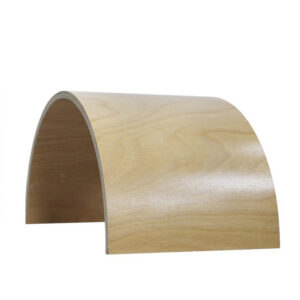
If you’re searching for a used Rofin laser cutting machine for die board production,you’re probably already deep into the numbers. A new industrial laser source is aserious investment, and a good second-hand Rofin unit — reliable, well-known in thelaser cutting world, still capable of years of service — looks like a smart way to get into(or expand) die board manufacturing without paying full price for a brand-new lasersource.
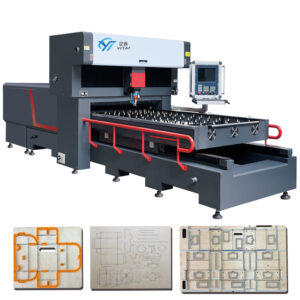
That instinct isn’t wrong. But there’s a question most sellers won’t walk you through: a laser source is only half the machine. The other half — the gantry, the cutting table,the control system, the auto-focus and anti-collision logic — is what actually determines whether that used Rofin turns into clean, precise die board cuts or into a source of daily headaches.
What a Used Rofin Actually Gives You
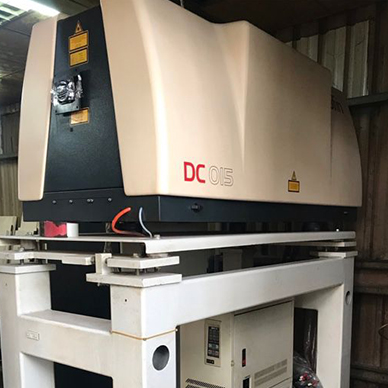
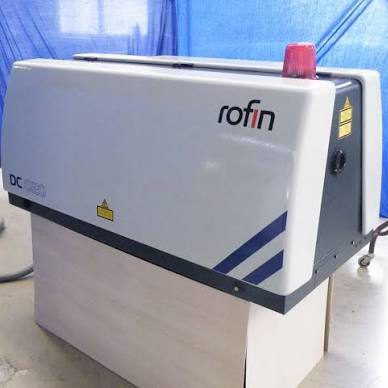
Rofin laser sources have a strong reputation for durability, which is exactly why theyshow up so often on the second-hand market. For die board manufacturers, tradingcompanies sourcing equipment for overseas clients, or packaging factories building outtheir first die-making line, a used Rofin can be an efficient way to access high power(1000W and above) without the upfront cost of a new source.
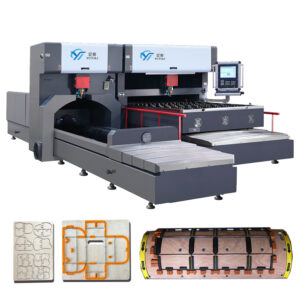
There’s also a detail worth knowing if you’re comparing costs: a single high-powerlaser source like a used Rofin can supply two machines at once — for example, oneflatbed machine for flat die boards and one rotary machine for round die boards — aslong as the machine bodies are built to accept an external source. That alone canmeaningfully change the economics of setting up a two-line die-making shop.
The Part That Actually Determines Your Cutting Quality
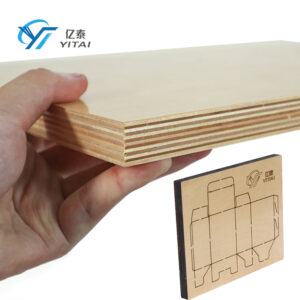
Here’s what tends to get overlooked: the laser source generates the beam, but the machine body is what turns that beam into an accurate, repeatable cut. For die boardwork specifically — where you’re often cutting 15–25mm plywood at kerf tolerances of0.45–1.07mm, and running multiple line types (0.5pt to 4pt) in the same pass — themechanical foundation matters as much as the power rating.
A few things worth checking regardless of which laser source you end up using:
- Table rigidity. A lightweight or poorly braced table will deform slightly underrepeated cutting cycles, and that shows up as inconsistent kerf width over time.Cast-iron tables in the 5-ton range are built specifically to hold zero deformationover years of continuous use.
- Auto-focus and anti-collision. Die board thickness isn’t perfectly uniform, and amagnetic anti-collision head paired with auto-focus prevents both head damage andinconsistent burn depth.
- Motion system precision. Ball screws (German-made options like REXROTH arecommon in higher-end setups) directly affect positioning accuracy, whichcompounds over a full 2440×1220mm cutting bed.
- Running costs. Gas consumption is one of the biggest hidden operating costs inlaser die cutting. A turbo pump system, for instance, can save several thousanddollars a year in gas alone — a number worth factoring into any used-vs-newcomparison.
None of these depend on which laser source you’re running. They’re properties of themachine body itself.
The Flexible Option: You Don’t Have to Choose Between“Used Rofin” or “New Complete Machine”
This is where most buyers researching used Rofin options don’t realize they have moreflexibility than they think. There are generally three paths:
You already own a used Rofin (or another laser source).
A well-built high-powermachine body can be configured to accept an external source directly — no need tobuy a new laser generator along with the machine.
You want a used laser source but don’t have one yet.
Rather than sourcing itblind through unfamiliar second-hand channels, it’s possible to have your equipment supplier help identify and vet a used Rofin (or comparable brand) to match yourmachine.
You’d rather buy a complete new machine.
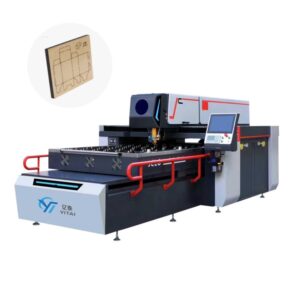
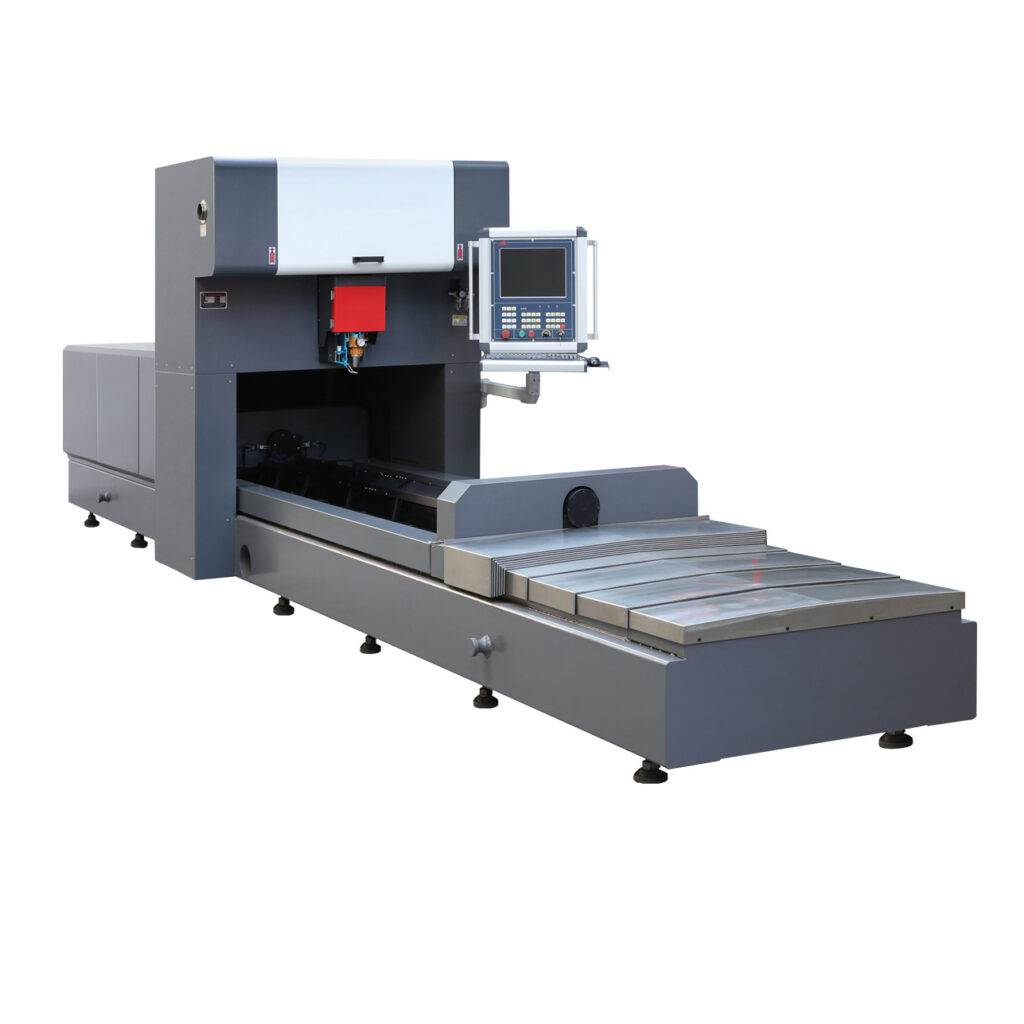
Flatbed die board laser cutters aretypically available across power tiers — commonly 400W, 600W, and 1000W+ —while rotary die board machines are typically offered in 1000W, 1500W, and 2000W configurations, so you can match power to your actual production volume rather than over- or under-buying.
For a shop planning to run both flat and rotary die board lines, option 1 or 2 combinedwith a shared high-power source is often the most capital-efficient route — one source,two machines, lower total spend than two independent systems.

How to Match Power to Your Production Volume
As a rough guide, a mid-to-high power flatbed setup (1000W–2500W range) handling15–25mm plywood die boards is generally suited to professional die makers producing in the range of 200+ die molds per month, with kerf accuracy holding between 0.45mm and 1.07mm. If your volume is lower or your board thickness is thinner, a 400W or 600W flatbed configuration may be more cost-effective — there’s little value in paying forpower headroom you won’t use.
One More Thing Worth Knowing
A die board laser cutting machine, built well, isn’t limited to plywood die boards. Thesame equipment can typically also cut iron and steel board, stainless steel, acrylic, and PVC sheet — which matters if you’re a trading company or a converting factory considering diversifying beyond die-making down the line. It’s not the main reason tobuy the machine, but it’s a useful piece of flexibility to have.
Bottom Line
If you’re evaluating a used Rofin laser for die board production, the real question isn’tjust “is this laser source reliable” — it’s “what machine body am I pairing it with, anddoes that body match the precision and rigidity die board cutting actually requires.” Aused laser source paired with a well-engineered machine body can be a genuinely smart, cost-efficient setup. The same laser source paired with a poorly built table willunder perform no matter how good the Rofin unit itself is.
If you already have a laser source — Rofin or otherwise — or you’re trying to decide between sourcing one used versus buying a complete new machine, it’s worth getting astraight answer on what your existing or planned setup can realistically achieve before you commit.