On any professional packaging die shop floor, the manual benders are irreplaceable. It is a tool that demands both physical skill and geometric understanding. Unlike automated bending, manual bending requires the operator to position the rule, select the appropriate die mold, and apply the perfect amount of force to achieve a clean, stress-free bend.
However, as modern packaging designs grow more complex and tolerances get tighter, traditional tool limitations become a bottleneck. Many workshops are now facing a critical choice: Should you stick to conventional benders, or upgrade to a European-Type Bender?
To help you secure higher-paying packaging orders, let’s explore why the engineering behind your tools determines your final die accuracy.
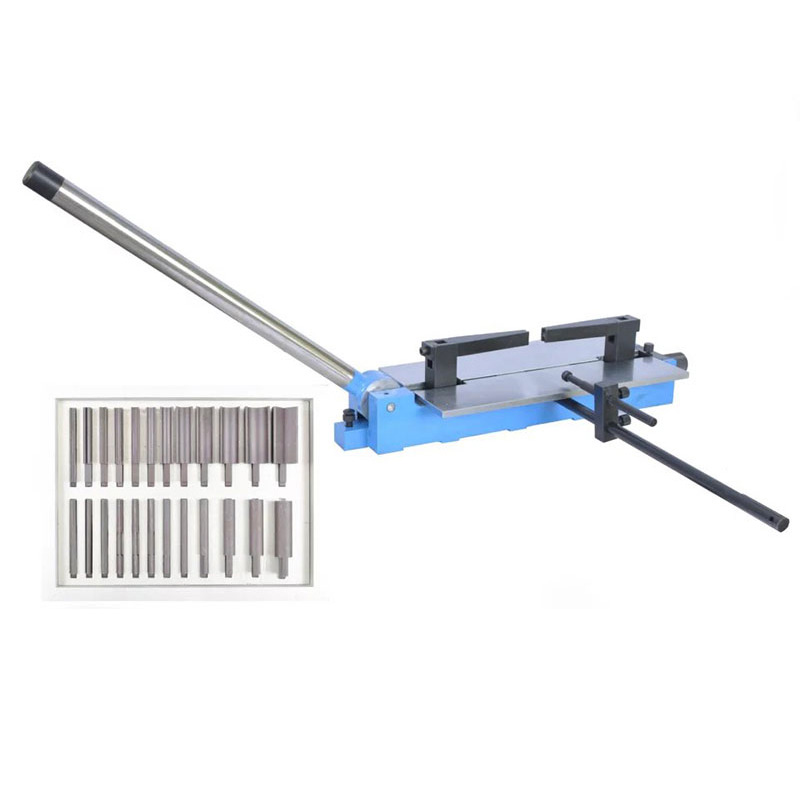
| Comparison Feature | Conventional Manual Benders | YITAI Manual Bender (YTB-07) |
| Mold Support Engineering | One-sided or unstable support (prone to tilting under high pressure) | Upper & Lower End Support Structure (ensures uniform force distribution) |
| Machine Body Material | Conventional Cast Iron (susceptible to rust and micro-deformation) | CNC-Machined High-Strength Alloy Steel (100% rust-free, superior structural rigidity) |
| Manufacturing Process | Standard casting/rough machining | Fully CNC Precision Machined Components |
| Flatness Tolerance | Standard workshop deviation (noticeable variance on thick rules) | Ultra-tight 0.1mm Flatness |
| Mold & Tooling System | Loose-fitting or random assortments | 24 pcs Classic Precision System (12 pairs of perfectly matched male/female molds) |
| Mold Durability | Standard steel (wears down quickly under continuous industrial use) | Quenched & Hardened Molds (over 50% improved wear resistance) |
| Supported Rule Height | Typically capped at a fixed 26mm | 8mm to 80mm (Universal plug-and-play base for tall blade customization) |
| Supported Rule Thickness | Mostly limited to standard 2pt blades | 0.45mm to 1.42mm (1pt to 4pt) |
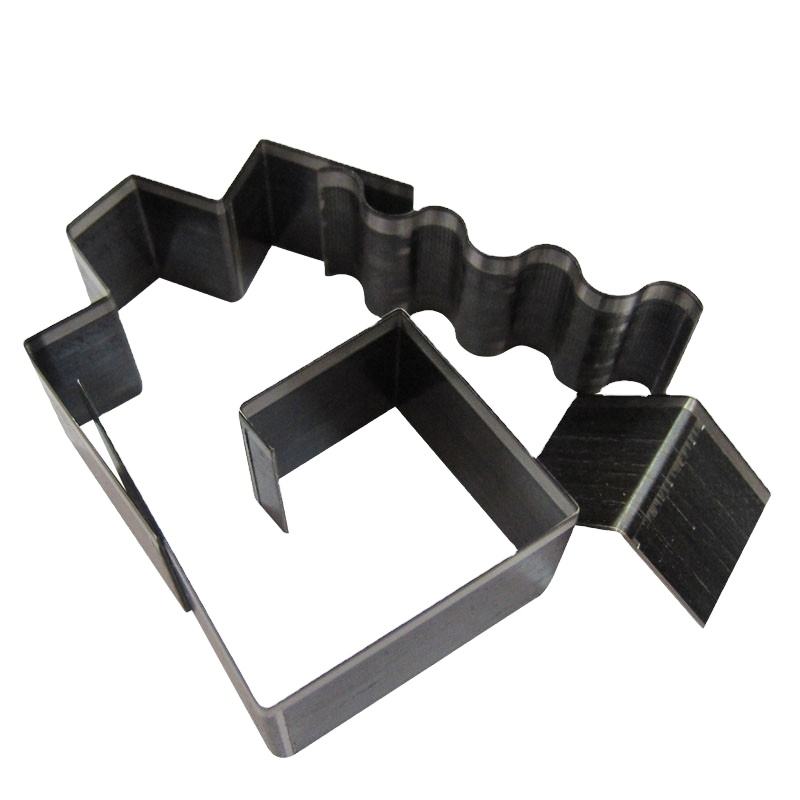
| Bending Contour Capability | Basic angles and simple curves | Complex irregular paths (arcs, waves, sharp angles, and 90° right angles) |
Mold Support Structure: Uniform Force vs. One-Sided Wear
Conventional Benders: Traditional manual bending machines often lack robust alignment fixtures. Under high pressure, the bending force is applied unevenly, causing the molds to tilt slightly over time. This leads to inconsistent bending angles and accelerated tool wear.
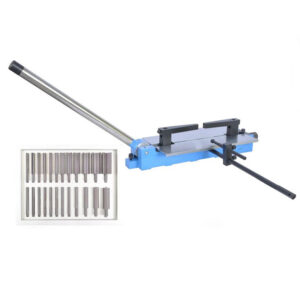
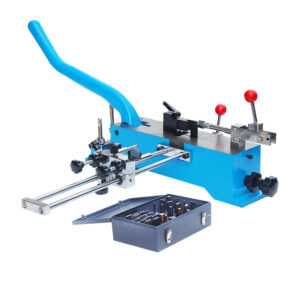
The YITAI Standard: The Manual Steel Rule Bender (YTB-07) utilizes an advanced engineering structure where the upper and lower ends fully support the mold. This structural breakthrough ensures that the mold is subjected to an absolutely uniform force, vastly improving bending accuracy and maintaining an ultra-tight flatness tolerance of 0.1mm.
Manufacturing Precision: CNC-Machined Alloy vs. Cheap Cast Iron
Conventional Benders: To cut production costs, many suppliers still use rough, conventional cast iron for machine bodies and molds. Cast iron is susceptible to micro-deformation under continuous industrial pressure and can rust easily in humid workshop environments, gradually destroying the machine’s alignment.
The YITAI Standard: Every components of our premium manual benders are built for ultimate precision. The entire bender body and molds are fully CNC-machined from high-strength alloy materials. This alloy body exhibits superior resistance to deformation, remains completely rust-free, and all tools undergo specialized quenching and hardening treatments—resulting in over 50% improved wear resistance and durability compared to iron cast bodies.
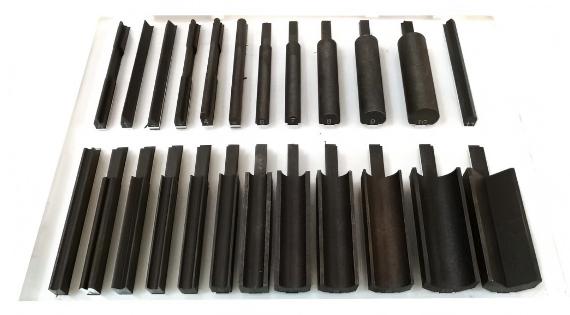
Tooling System: 12 Pairs of Matched Molds vs. Random Assortments
Conventional Benders: Standard tools often come with unmatched, loose-fitting molds that require operators to constantly fiddle with alignment, slowing down production speeds.
The YITAI Standard: The YTB-07 is supplied with a 24-piece precision tool set. Instead of random shapes, each mold is designed based on various angles and curvatures commonly used in the die-making industry. They feature male and female molds matched perfectly in pairs (total 12 pairs), allowing for seamless execution of both single custom bends or repeated, multi-copy bending.
Height & Material Versatility: Modular Design vs. Fixed Limits
Conventional Benders: Traditional manual benders are typically capped at a maximum height of 26mm, leaving you completely unequipped to handle high-rule or specialized rotary blades.
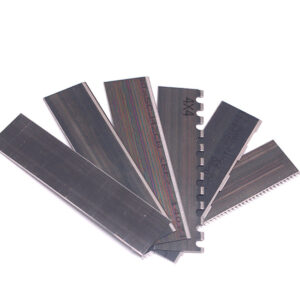
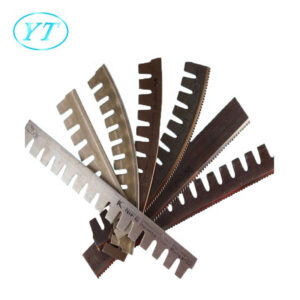
The YITAI Standard: Thanks to the upper and lower structural support, our modular design allows you to install higher molds, such as 50mm, 60mm, or 80mm. This enables you to easily handle rule thicknesses from 0.45mm to 1.42mm (1pt to 4pt) and taller rule heights up to 80mm. Through segmented bending, operators can smoothly form complex die blade contours—including arcs, right angles, sharp angles, and wavy shapes—for irregular packaging dies.
Shop Floor Insight: Enhancing the Operator’s Craft
A manual bender is not just a machine; it is an extension of the operator’s skill. Master die-makers can produce perfect 90-degree bends with tight radii that rival CNC precision, simply by understanding how the grain direction of the rule affects the bend to prevent micro-fractures.
However, even the most skilled master craftsman cannot fight a flexing cast-iron frame or uneven mold forces. By replacing conventional cast-iron benders with the CNC-machined, alloy-bodied YTB-07, you give your team the rigid, high-tolerance platform they need to deliver flawless, high-quality results every single time.
Ready to Upgrade Your Die Shop’s Capabilities? Stop letting frame flex and inconsistent bending alignment limit your production precision. Give your operators the industrial-grade rigidity they need to deliver zero-error packing dies every single time. Contact us sales_diemaking@yitaipacking.com today.