20 years ago, when I first took charge of a die-making workshop, things were very different. CNC automation and laser technology were just starting to become mainstream for high-volume production. Back then — and still true today for many small and medium-sized die-making shops — the real backbone of the workshop was not high-tech robots, but skilled craftsmen working with dependable, purpose-built manual machines.
In this industry, many people wrongly believe that manual machines are outdated. But from my years of managing production lines, I can say this is simply not true. Even now, in our own workshop equipped with advanced CNC rotary benders and laser cutters, manual machines still play an essential role. They are the foundation for training new operators, handling small-batch custom jobs, and performing precise finishing work that automation cannot always do efficiently.
If you’re planning to open a new die-making shop or upgrade your current workshop, learning about these six essential manual machines is the first step to building a capable operation. These are not just tools — they are the true pillars of precision, quality control, and craftsmanship.
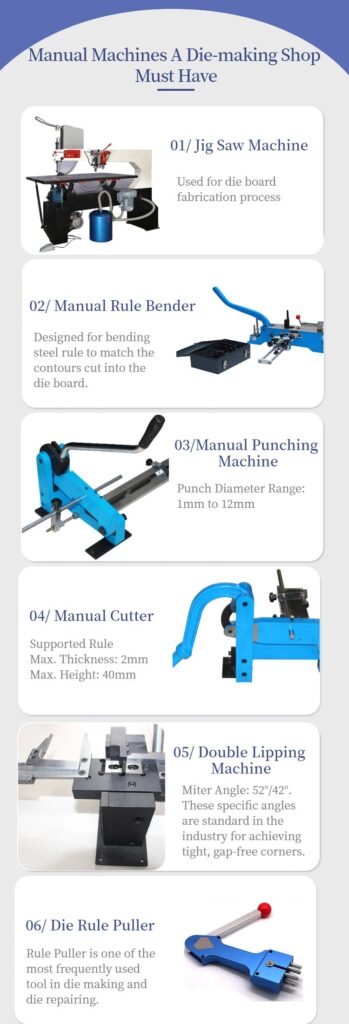
Why Manual Machines Still Matter in Modern Die-Making
Before we look at each machine in detail, let me explain why they matter. On the factory floor, we judge success by three things: speed, accuracy, and flexibility.
Automated machines are great for speed and consistency on repetitive jobs. But manual machines give us unmatched flexibility. When a client needs a last-minute design change on a flat die — a small tweak to a creasing rule, or a special bridge that doesn’t fit standard automated settings — manual machines let our senior technicians make the adjustment quickly, without stopping the main production line.
What’s more, manual machines are where new die-makers build real skill. From my experience, operators who learn to bend, notch, and cut steel rule by hand develop a natural understanding of how materials work — how much pressure a rule can take before breaking, how a notch affects stripping, or how a small misalignment can ruin the whole die. This hands-on knowledge cannot be learned only by programming a CNC machine.
Now let me show you the six essential manual machines that every professional die-making shop must have.
1. Jig Saw Machine
The Jig Saw Machine is the heart of the die board fabrication process. Its purpose is simple yet critical: cutting the slots (kerfs) into plywood or plastic die boards that will later house the steel rule.
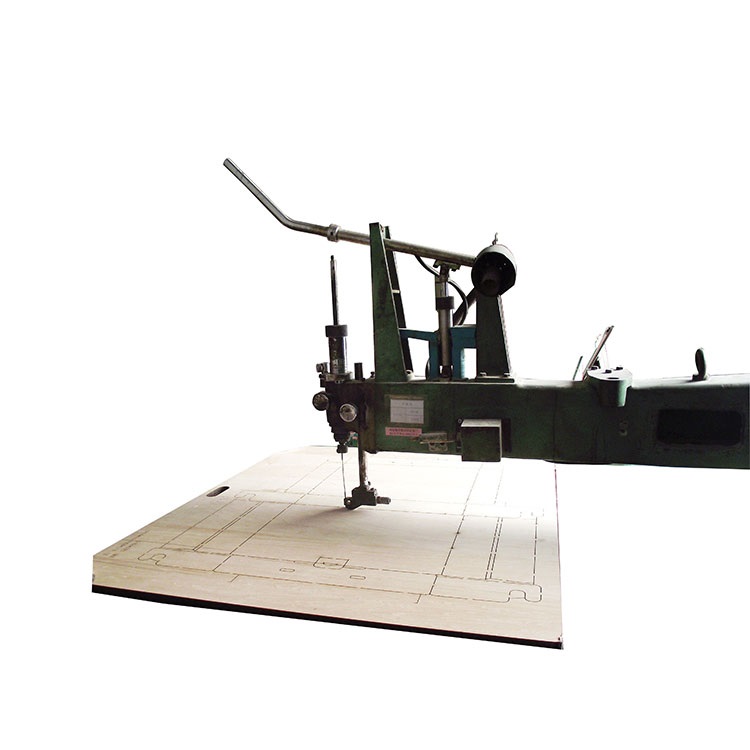
Die making jig saw
In our shop, the jig saw is the first stop in flat die production. The operator uses this machine to trace the pattern of the die layout, cutting precisely along the lines that define where each piece of steel rule will sit. The accuracy of this step determines whether the final die will produce clean, consistent cuts or suffer from rule displacement.
Key Specifications:
- Working Table Size: 800×1200mm or 1000×1300mm—this gives you ample space to work on standard-sized flat dies, from small packaging inserts to larger carton dies.
- Saw Blade Thickness: 0.3-3mm. The ability to swap blades based on the thickness of the rule you intend to use is critical. Thinner blades for intricate curves, thicker blades for straight, heavy-duty slots.
- Supported Max Thickness of Plywood: 30mm. This is important because thicker die boards are required for jobs involving heavy cardboard or corrugated materials. A machine that cannot handle at least 25-30mm will limit your market.
Shop Floor Insight: In my experience, the jig saw is where precision begins. A common mistake new shops make is neglecting blade tension and maintenance. A dull or loose blade creates an uneven kerf, which leads to rule “walking” during the cutting process. We enforce a strict blade inspection routine before every major job.
2. Manual Bender
If the jig saw defines the path, the Manual Bender shapes the traveler. This machine is designed for bending steel rule to match the contours cut into the die board.

Manual Bending Machine
The manual bender is a tool that demands both physical skill and geometric understanding. Unlike automated benders that follow programmed angles, the manual bender requires the operator to position the rule, select the appropriate die mold, and apply the correct amount of force to achieve a clean, stress-free bend.
Key Specifications:
- Max. Thickness: 1.42mm (4pt). This covers the vast majority of steel rule used in standard packaging and carton dies. Four-point rule is the industry standard for cutting paper and light cardboard.
- Max. Height: 26mm or customizable. Rule height determines the cutting depth and the type of ejection material used.
- Moulds Quantity: 36pcs. The variety of molds is what makes this machine versatile. Different radii, angles, and shapes require different molds. Having a comprehensive set allows you to handle everything from sharp corners to large-radius curves.
Shop Floor Insight: A manual bender is not just a machine; it is an extension of the operator’s skill. I have seen master die-makers produce perfect 90-degree bends with tight radii that rival CNC precision. The key is training. We typically require new operators to spend at least 40 hours practicing on a manual bender before they are allowed to work on client orders. Understanding how the grain direction of the rule affects the bend is a critical skill that prevents micro-fractures that later lead to rule breakage on the press.
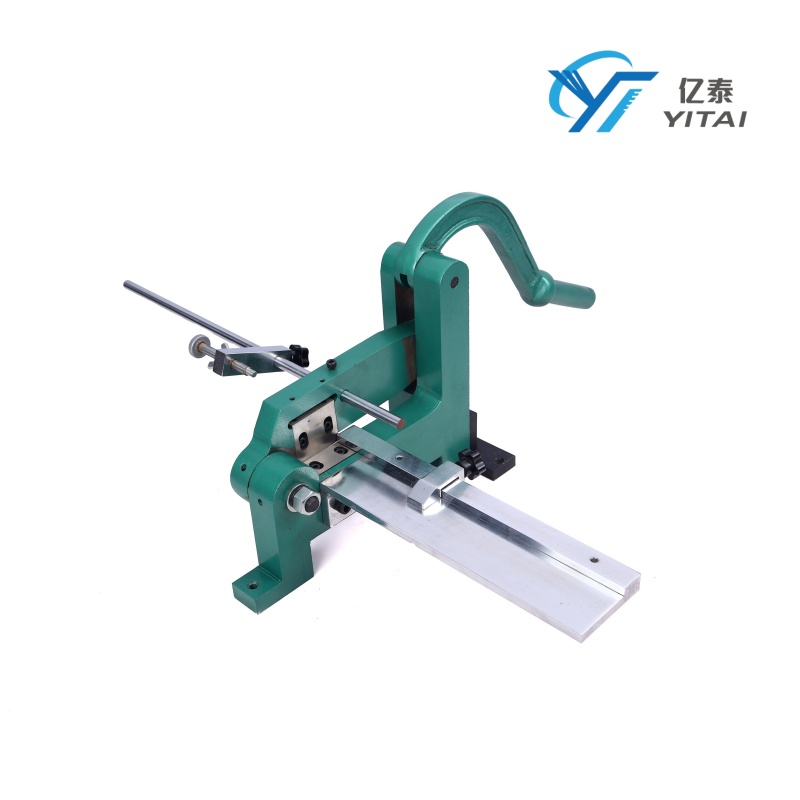
3. Manual Punching Machine
Punching features—including precision holes, alignment points, and removal sections—are among the most critical structural details in die construction. The Manual Punching Machine is purpose-built for this core operation: creating clean, accurate openings in die boards, cutting rule segments, or forming precise holes for alignment, ejection, and structural modification.
Manual Punching Machine
Without reliable punching, dies cannot achieve proper registration, waste cannot be fully extracted, and critical components cannot be securely fitted, leading to misalignment, poor cutting quality, and frequent press downtime. I view the manual punching machine as indispensable for achieving die functionality and precision.
Key Specifications:
Compatible Material Thickness: Die boards from 15mm to 30mm, and steel rules up to 2mm thick. The machine must deliver consistent pressure to penetrate dense substrates without cracking or deforming.
Punch Diameter Range: 1mm to 12mm. Standard sizes cover common alignment holes, waste gaps, and mounting points.
Punching Accuracy: ±0.05mm. Precision ensures perfect alignment with die-cut profiles and consistent assembly across the tool.
Shop Floor Insight: One vital lesson we’ve learned is controlling punching position and sequence. Punching too close to bending sections or stress points can weaken the die board or distort steel rule stability. Our technicians always mark punching locations manually in advance, balancing structural strength with functional performance to ensure long die life and stable production.
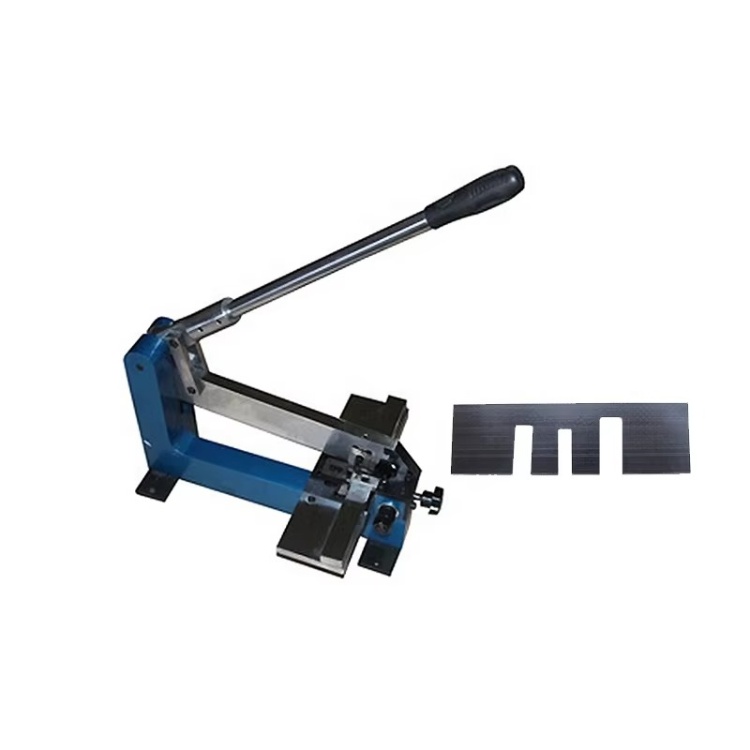
4. Manual Cutter
Cutting steel rule to precise lengths is a fundamental operation in die-making. The Manual Cutter is designed specifically for this purpose, providing a clean, square cut that ensures a tight fit when the rule is inserted into the die board.
Die Blade Steel Rule Manual Cutter
A poor-quality cut—one that is angled or leaves burrs—creates a gap between rule segments. These gaps affect the cutting quality and can lead to “hanging” paper or board, which causes production issues for the end user.
Key Specifications:
- Supported Rule Max. Thickness: 2mm. This machine can handle thicker rules used for heavy-duty applications such as corrugated board dies or industrial gaskets.
- Supported Rule Max. Height: 40mm or customized. Taller rules are often used for thicker materials or for dies that require deeper penetration.
Shop Floor Insight: We enforce a strict “measure twice, cut once” protocol on our manual cutters. Even a 0.5mm error in rule length can cause misalignment across a large die. Our operators use digital calipers in conjunction with the manual cutter to verify lengths before making the final cut.
5. Double Lipping Machine
Lipping, or mitering, refers to the process of cutting the ends of steel rule at precise angles so that two pieces meet perfectly at a corner. The Double Lipping Machine is specifically designed to create these angled ends with high repeatability.
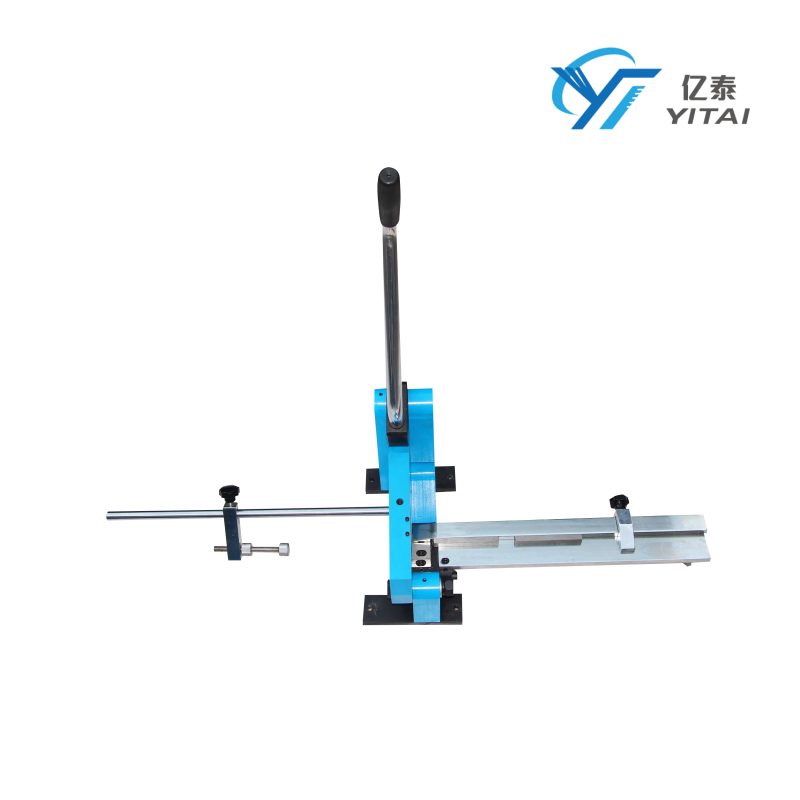
YTLC-40 Manual Lipping Machine
In a flat die, the quality of the mitered corners directly determines whether the die produces a sharp, clean corner on the finished product or leaves a “dog-ear” or uncut tab.
Key Specifications:
- Supported Rule Max. Thickness: 0.71mm (2pt).
- Supported Rule Max. Height: 23.80mm.
- Miter Angle: 52°/42°. These specific angles are standard in the industry for achieving tight, gap-free corners.
- Caliper: 500mm. This refers to the capacity for measuring or positioning the rule accurately before lipping.
Shop Floor Insight: The double lipping machine is one of the most skill-intensive manual tools in the shop. Achieving a seamless joint between two mitered rules requires not only precise cutting but also a deep understanding of how the rule will compress when the die is mounted on the press. We use magnified inspection on critical mitered joints to ensure there is no gap visible.
6. Rule Puller
The Rule Puller is the simplest tool on this list, but it is also one of the most frequently used. It is essentially a specialized pry bar designed for inserting, adjusting, and removing steel rule from die boards.
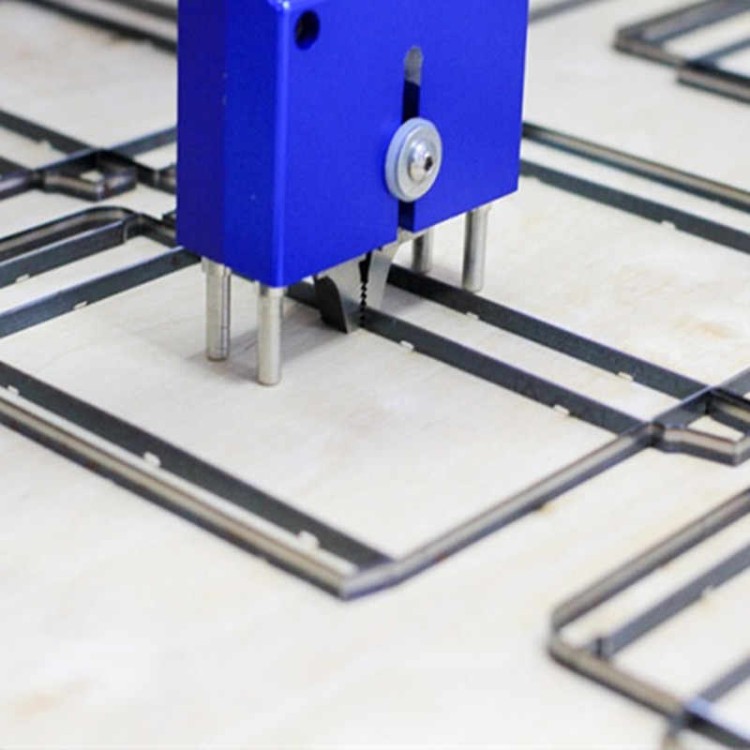
Die Rule Puller
During die assembly, rules must be seated fully and firmly into the kerfs. During maintenance or re-knifing, damaged rules must be extracted without damaging the surrounding die board. The rule puller is the tool that makes these operations safe and efficient.
Key Specifications:
- Size: 100×25×500mm. This compact size allows for precise control and access to tight areas.
- Weight: 1.5KG net. Light enough for extended use but substantial enough to provide leverage.
Shop Floor Insight: In our shop, every die-maker has a rule puller within arm’s reach. It is used constantly—not just for pulling broken rules, but for fine-tuning rule positions during assembly. A common mistake among new shops is using makeshift tools like screwdrivers or pliers to pry rules, which damages the die board and deforms the steel. A proper rule puller is designed to distribute force evenly, protecting both the rule and the board.
Building Your Die-Making Shop: A Strategic Approach
If you are establishing a new die-making shop, my recommendation is to start with these six manual machines. They provide the foundational capabilities to produce high-quality flat dies for packaging, cartons, and corrugated board applications.
Here is a suggested acquisition order based on our own experience:
- Jig Saw and Manual Bender: These are your core production machines. Without them, you cannot produce a complete die.
- Manual Cutter and Notcher: These allow you to refine your production, improving fit and ejection quality.
- Double Lipping and Rule Puller: These elevate your craftsmanship, enabling superior corner quality and efficient maintenance.
While the die-making industry is increasingly moving toward automation, the demand for manual craftsmanship remains strong—particularly for short-run custom jobs, prototype development, and repair work. A shop equipped with high-quality manual machines and skilled operators can compete effectively by offering flexibility and quick turnaround times that fully automated shops sometimes struggle to provide.
Conclusion
Manual machines are not relics of the past; they are the training grounds, the problem-solving tools, and the reliable workhorses of any die-making operation. The Jig Saw, Manual Bender, Notcher, Cutter, Double Lipper, and Rule Puller form a complete ecosystem that allows a skilled operator to transform raw steel rule and plywood into a precision cutting tool.
From my years on the shop floor, I can tell you that the quality of your tools directly influences the quality of your work. Invest in robust, purpose-built manual machines. Invest in training your operators. And you will build a reputation for precision and reliability that will keep customers coming back.
For more information on die-making equipment and to explore our full range of manual and automated solutions, please contact our sales team at sales_diemaking@yitaipacking.com .