If you have ever spent a full day on a die-making shop floor, you know that the loudest machines—the jig saws, the benders, the cutters —tend to get all the attention. They are the stars of the show, the heavy lifters that visitors marvel at when they tour the facility. But ask any veteran die-maker about the one tool they reach for most often, and I guarantee you will hear a different answer.
In my fifteen years managing die-making operations, the tool I have seen in the hands of our senior technicians more than any other—besides a good pair of calipers—is the Rule Puller.

It is small. It is simple. It is unassuming. And yet, without it, our production floor would grind to a halt. The rule puller is the tool that bridges the gap between assembly and precision, between a damaged die and a salvaged one, between a time-consuming repair and a quick, efficient fix. Today, I want to give this humble tool the attention it deserves and explain why, if you are setting up a die-making shop or looking to improve your current operations, investing in quality rule pullers is a decision you will not regret.
What Is a Rule Puller?
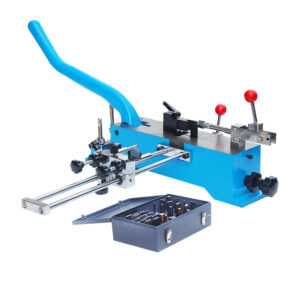
At its most basic level, a rule puller is a specialized hand tool designed for the insertion, adjustment, and removal of steel rule from die boards. But calling it a “specialized pry bar” does not do it justice. A well-designed rule puller is the result of decades of shop-floor experience, engineered to solve a very specific problem: how do you manipulate steel rule—sharp, hardened, and tightly seated—without damaging the rule itself, the die board, or your own hands?
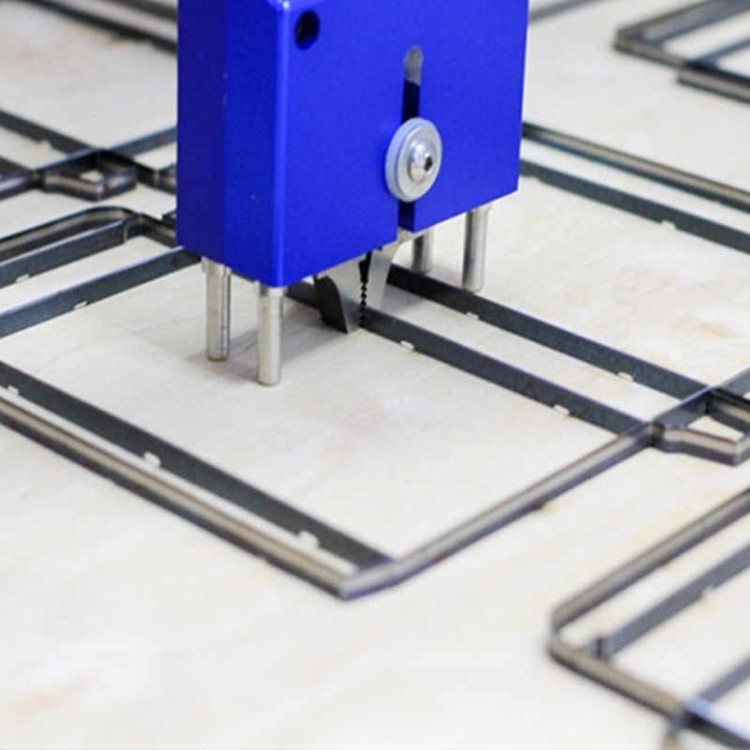
The rule puller we use in our shop is specifically designed for changing cutting, creasing, and perforating rules in the 1 to 4-point thickness range. This covers the vast majority of standard applications in packaging, carton, and corrugated die-making. Whether we are performing a routine re-knifing on a worn die, swapping out a damaged rule in the middle of a production run, or making last-minute adjustments during initial assembly, the rule puller is the tool that makes it possible.
The Anatomy of a Quality Rule Puller
Let me break down the specific features that transform a simple piece of metal into an indispensable shop-floor tool. Not all rule pullers are created equal, and the differences in design have a direct impact on efficiency, safety, and die quality.
1. Simple and Efficient Handling
In a production environment, complexity is the enemy of productivity. The rule puller we use is designed with a straightforward, ergonomic handle that allows the operator to apply controlled force without awkward hand positions. The tool fits naturally in the palm, and its leverage is calibrated specifically for the task at hand—not too much that you risk over-stressing the rule, but enough to extract a tightly seated rule with one smooth motion.
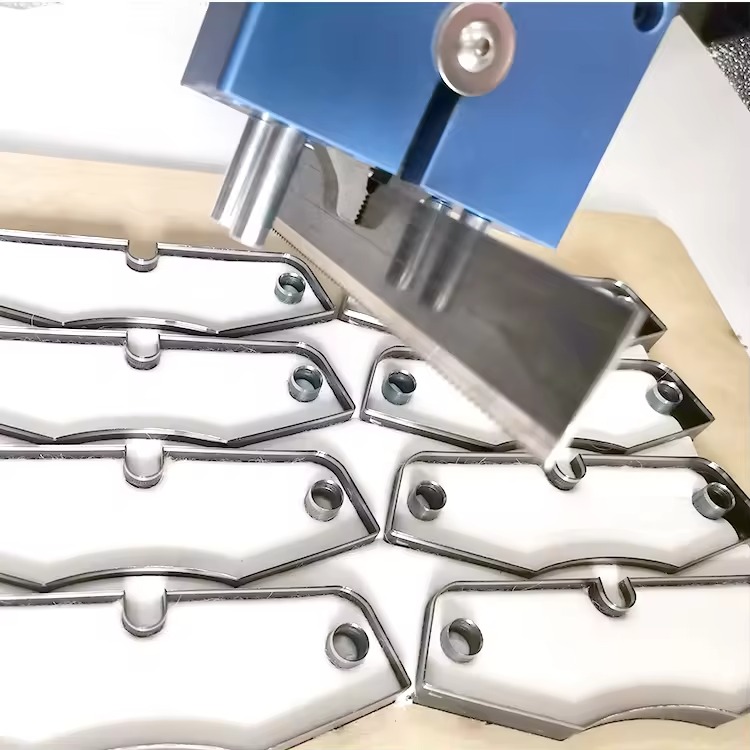
I have seen shops where technicians resort to using flathead screwdrivers or pliers to pry out rules. The result is almost always the same: damaged die boards, bent or twisted rules, and, too often, cut hands. A purpose-built rule puller eliminates these risks entirely. The motion becomes intuitive, and the operator can focus on the precision of the work rather than struggling with the tool.
2. Suitable for 1-4 pt. Rules
The 1 to 4-point rule range represents the core of the die-making industry. One-point rules are typically used for micro-perforations, kiss-cutting of thin films, and delicate applications. Two-point rules are common for standard cutting and creasing in folding cartons. Three and four-point rules handle heavier board, corrugated materials, and applications requiring deeper penetration.
A rule puller that can handle this entire range is a versatile asset. In our shop, we use the same rule puller for everything from pharmaceutical carton dies to corrugated display dies. The tool’s design accommodates the varying thicknesses without requiring adjustments or different tooling.
3. Replacement Clamping Jaws (Wide and Narrow)
This is where the rule puller transforms from a simple tool into a precision instrument. The clamping jaws are the part of the tool that actually grips the steel rule. Different applications require different jaw configurations.
- Wide jaws provide a broader gripping surface. We use these for straight sections of rule where we need to apply even pressure across a longer segment. They are ideal for extracting long runs of rule in one piece, which is often faster than breaking the rule into smaller sections.
- Narrow jaws are designed for tight spaces. In complex dies with intricate patterns, there are often internal corners, small bridges, and areas where rule segments are only a few millimeters long. The narrow jaws allow our technicians to access these confined areas without disturbing adjacent rules or damaging the die board.
The fact that these jaws are replaceable is a significant advantage. Clamping jaws are wear items—they will eventually show signs of use as they grip hundreds or thousands of rules. Being able to swap out worn jaws instead of replacing the entire tool keeps our operating costs down and ensures that our technicians always have a tool with a sharp, secure grip.
4. Narrow and Wide Clamping Jaws Included in the Kit
One of the frustrations I have encountered when purchasing tools for the shop is the “nickel-and-diming” approach—where the base tool is sold at a reasonable price, but the essential accessories are separate, expensive add-ons. A quality rule puller kit comes with both narrow and wide clamping jaws included.
In our shop, this means that when a technician reaches for a rule puller, they have everything they need to handle any job. There is no time wasted searching for a separate accessory kit or, worse, attempting to use the wrong jaws for a delicate operation. The complete kit approach reflects an understanding of how real shops operate: we need tools that are ready to work when we are.
5. Magnetic Foot Pins Enable Easy and Flexible Positioning
This feature is, in my experience, one of the most underappreciated innovations in hand tool design for die-making. The magnetic foot pins are small but transformative.
When you are working on a die—particularly during assembly or repair—you often need both hands free. One hand might be holding a rule in place while the other prepares to insert a bridge or apply ejection rubber. The rule puller itself needs to be positioned precisely before it is engaged. With a non-magnetic tool, you either have to set it down (losing your position) or awkwardly hold it while working.
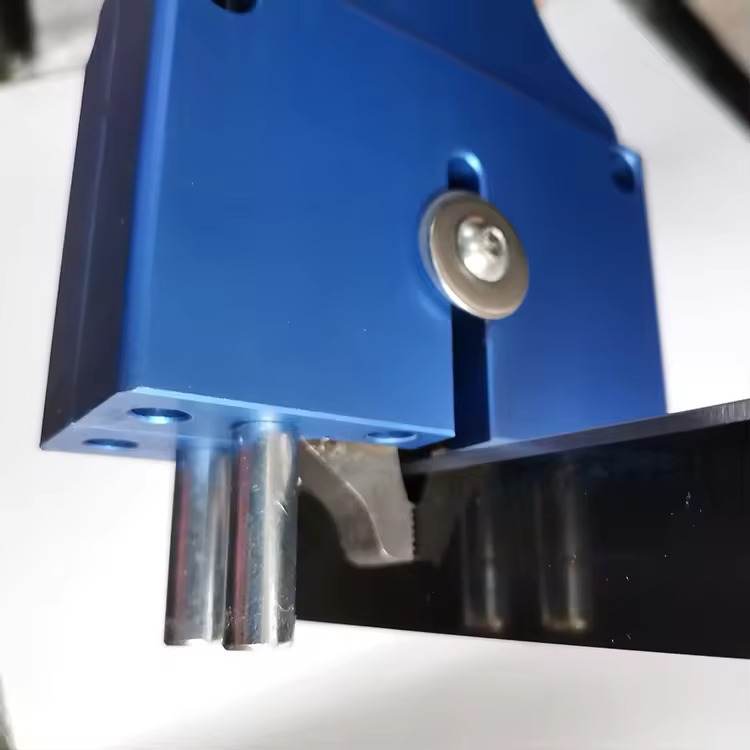
Flat & rotary rule blade puller
The magnetic foot pins allow the rule puller to stand upright on the steel surface of the die board or work table, staying exactly where you placed it. When you are working on a large die with multiple rule changes, this is a significant productivity boost. You can position the tool at the exact point where you will need it, free both hands to prepare the new rule or clear debris, and then pick up the tool and apply it without repositioning.
Moreover, the magnetic foot pins are flexible. They allow the tool to be positioned at different angles and orientations, accommodating the operator’s preferred working posture and the specific geometry of the die. This flexibility reduces fatigue over long shifts and contributes to more precise work.
The Rule Puller in Practice: Shop Floor Scenarios
Let me share a few real-world scenarios where the rule puller proves its value.
Scenario 1: Re-knifing a Worn Die
One of our clients sends back a flat die that has run 500,000 cycles on a high-speed flatbed press. The cutting rule on one section is showing signs of wear—the cut quality has degraded, and the client needs the die refurbished quickly. Our technician places the die on the workbench, identifies the worn rule segment, and uses the rule puller with the wide jaws to extract the entire damaged section in one piece. The die board remains intact, and we can insert a new, pre-bent rule in minutes. Without the rule puller, this operation would require carefully prying the rule out section by section, risking damage to the die board and adding significant time to the turnaround.
Scenario 2: Last-Minute Adjustment
During initial assembly of a complex folding carton die, our technician notices that a creasing rule is sitting slightly high—it will cause over-compression on the press. Using the rule puller with the narrow jaws, the technician gently lifts the rule, adjusts the ejection rubber underneath, and reseats the rule. The adjustment takes thirty seconds. Without the rule puller, the technician would have to partially disassemble the die or attempt to use a flat tool that could damage the surrounding rule.
Scenario 3: Emergency Repair on the Production Floor
A customer is running a high-volume job when a rule breaks on the press. The press operator calls our service team. Our technician arrives with a rule puller, a new pre-bent rule, and a few basic hand tools. Using the narrow jaws to access the broken rule in a tight area, the technician extracts the damaged piece, cleans the kerf, and inserts the new rule. The press is back up and running within fifteen minutes. This kind of rapid response is only possible when the technician has the right tool for the job.
Why the Rule Puller Matters for Your Shop
If you are setting up a new die-making shop or looking to improve your existing operations, I strongly recommend that you treat the rule puller as a foundational tool—not an afterthought.
Here is why:
- Quality: A rule puller that grips evenly and applies force correctly protects the integrity of both the rule and the die board. This translates directly into longer die life and better cutting performance for your customers.
- Safety: The steel rule used in die-making is sharp. Attempting to remove or adjust rule with improvised tools is a recipe for injury. A proper rule puller keeps hands away from cutting edges and provides controlled, predictable force.
- Efficiency: Time is money in a die-making shop. A technician with a good rule puller can perform rule changes and adjustments in a fraction of the time it would take with makeshift tools.
- Versatility: With interchangeable jaws and magnetic positioning, a quality rule puller adapts to a wide range of tasks, from major re-knifing jobs to fine-tuning adjustments.
Conclusion
In the world of die-making, we often focus on the big machines—the jig saws, the benders, the CNC routers. And rightfully so; these machines define our core capabilities. But it is the hand tools—the rule puller, the calipers, the hammers—that enable our skilled technicians to execute with precision.
The rule puller is not glamorous. It will never be the centerpiece of a trade show booth. But walk onto any busy die-making shop floor, and you will find them within arm’s reach of every workbench. It is the tool that our technicians trust for the countless small but critical tasks that happen between the big operations.
If you are building a die-making shop, do not overlook this essential tool. Invest in quality rule pullers with replaceable clamping jaws and magnetic foot pins. Equip your technicians with the tools they need to work safely, efficiently, and precisely. And you will find, as we have, that this humble tool pays for itself many times over in improved quality, faster turnaround, and reduced frustration.
For more information on die-making tools and equipment, including the rule puller and other essential manual tools, please contact our sales team at sales_diemaking@yitaipacking.com.