Quality & Dimensional Criteria Focused on Die Board Performance
In die-making production, plywood is not just a panel material — it is the structural foundation of the die board. The stability, cutting accuracy, blade insertion precision, and service life of a die all depend on the quality and dimensional consistency of the plywood.
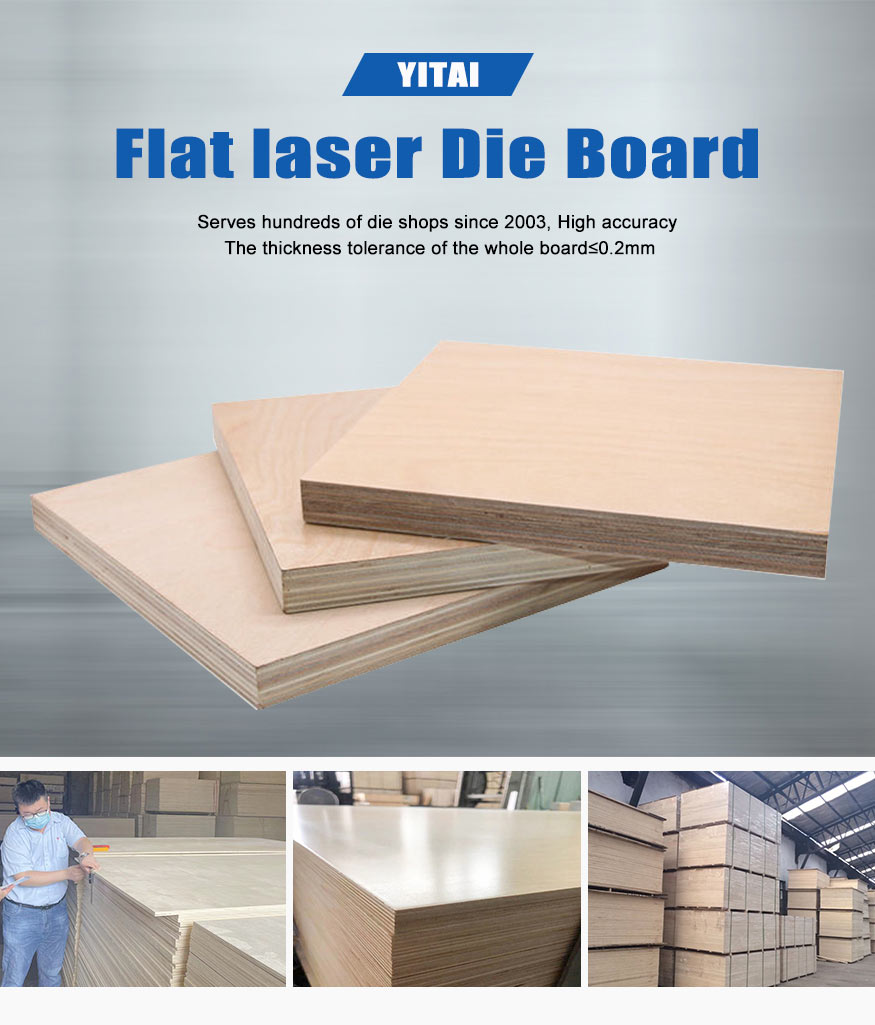
To help die-making factories reduce production risks and improve finished die accuracy, we have summarized practical plywood selection standards specifically tailored to die board applications, focusing on structural integrity, surface quality, and dimensional tolerance control.
Quality Requirements for Die Board Applications
For die-cutting boards, plywood must withstand laser cutting, rule insertion, repeated pressure, and long-term use without deformation. The following defects are strictly unacceptable:
1. Delamination / Bubbling — Strictly Prohibited
Any internal separation will significantly reduce structural strength.
In die boards, this may lead to:
- Rule loosening after insertion
- Structural cracking during die-cutting
- Reduced pressure resistance
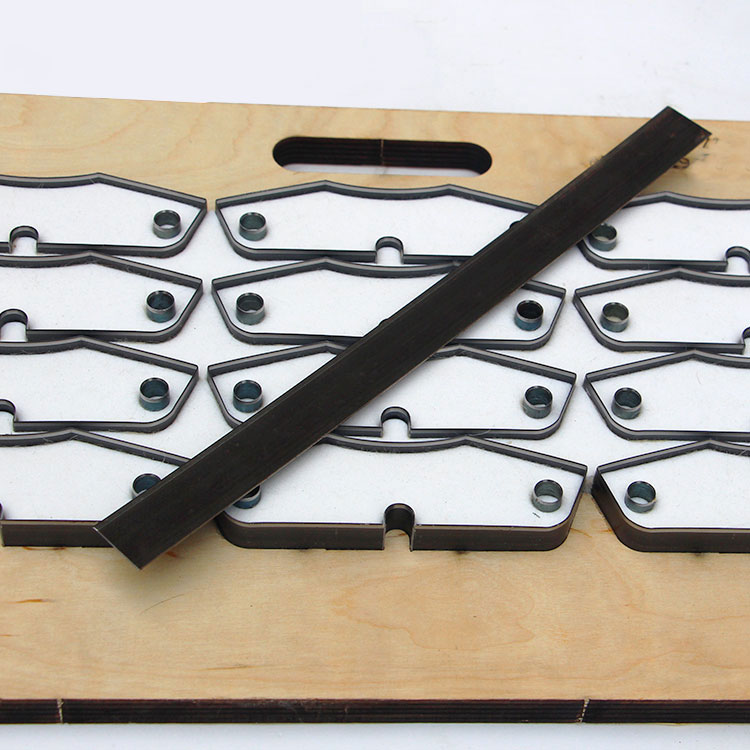
Cutting Rule Die
2. Core Board Separation — Strictly Prohibited
Gaps between core layers cause:
- Uneven laser cutting depth
- Blade instability
- Risk of board breakage under pressure
3. Warpage — ≤ 1.0mm per meter (1.0MM/M)
Flatness is critical for die precision.
Excessive warpage results in:
- Uneven cutting pressure
- Poor die registration accuracy
- Increased machine adjustment time
4. Surface Flatness (Front & Back)
Both surfaces must be:
- Smooth
- Free of peeling
- Free of uneven bulging
- Free of veneer separation
Uneven surfaces directly affect:
- Laser cutting consistency
- Adhesion of protective films
- Overall die durability
5. Veneer Quality Standards
- ❌ No blue stains (indicates mold or decay)
- ❌ No heavy pressure marks
- ❌ No dead knots on the surface
- ❌ No internal impurities
- ❌ No veneer overlapping
Dead knots and impurities may cause:
- Laser cutting deviation
- Weak blade holding strength
- Localized structural failure
6. Core Layer Joint Gap — ≤ 1mm
Excessive joint gaps lead to:
- Uneven stress distribution
- Reduced compression resistance
- Higher risk of cracking during die use
7. No Board Splicing Gaps
Splicing gaps compromise:
- Structural integrity
- Airtightness
- Cutting accuracy
8. No Interlayer Cracks or Surface Cracking
Any cracking between layers reduces:
- Die board lifespan
- Resistance to repeated cutting pressure
9. Edge & Corner Integrity
For boards ≤ 10mm thickness:
- Edge and corner damage is strictly prohibited
Damaged edges affect:
- Installation accuracy on die machines
- Positioning stability
- Production efficiency
Dimension & Tolerance Standards for Die Precision
Dimensional accuracy directly determines die assembly accuracy and production consistency.
1. Thickness Tolerance: 0 ~ +0.2mm
- No negative deviation allowed
- Uniform thickness ensures consistent blade insertion depth
- Guarantees stable die pressure performance
2. Standard Width
- 1220mm
- 915mm
Allowable deviation: ±1.0mm
3. Standard Length
- 2440mm
- 1830mm
Allowable deviation: ±2.0mm
4. Diagonal Tolerance
Difference between diagonals < 3.0mm
Ensures:
- Accurate rectangular shape
- Proper machine alignment
- Reduced trimming work
5. Edge Straightness
Allowable deviation: ±1.5mm per meter
Straight edges ensure:
- Smooth board splicing
- Accurate die layout
- Reduced material waste
Why Strict Plywood Standards Matter in Die-Making
For die factories, unstable plywood leads to:
- Blade loosening
- Inconsistent cutting pressure
- Shortened die lifespan
- Increased rework rate
- Customer complaints
By strictly controlling plywood quality and dimensional accuracy, die manufacturers can:
- Improve laser cutting precision
- Enhance blade holding strength
- Extend die service life
- Reduce production risks
- Ensure stable batch consistency
Conclusion
High-quality plywood is the structural core of precision die boards.
Strict inspection of structural integrity, surface condition, and dimensional tolerance is not optional — it is essential for producing reliable, high-performance dies.
Implementing these selection standards helps die factories improve production stability, reduce hidden risks, and deliver consistent cutting performance to their end customers.