Introduction: The Unsung Hero of Precision Die-Cutting
Every high-quality cutting die begins with a single, often overlooked component: the plywood die board. This wooden foundation—whether flat or rotary—serves as the precise housing for steel rule blades, determining how accurately those blades maintain their position through thousands or even millions of cutting cycles .
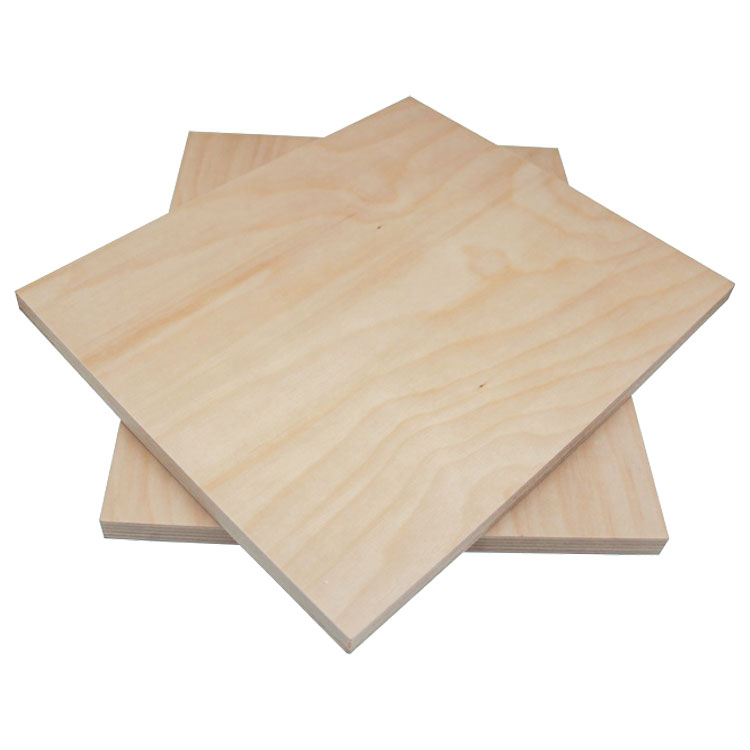
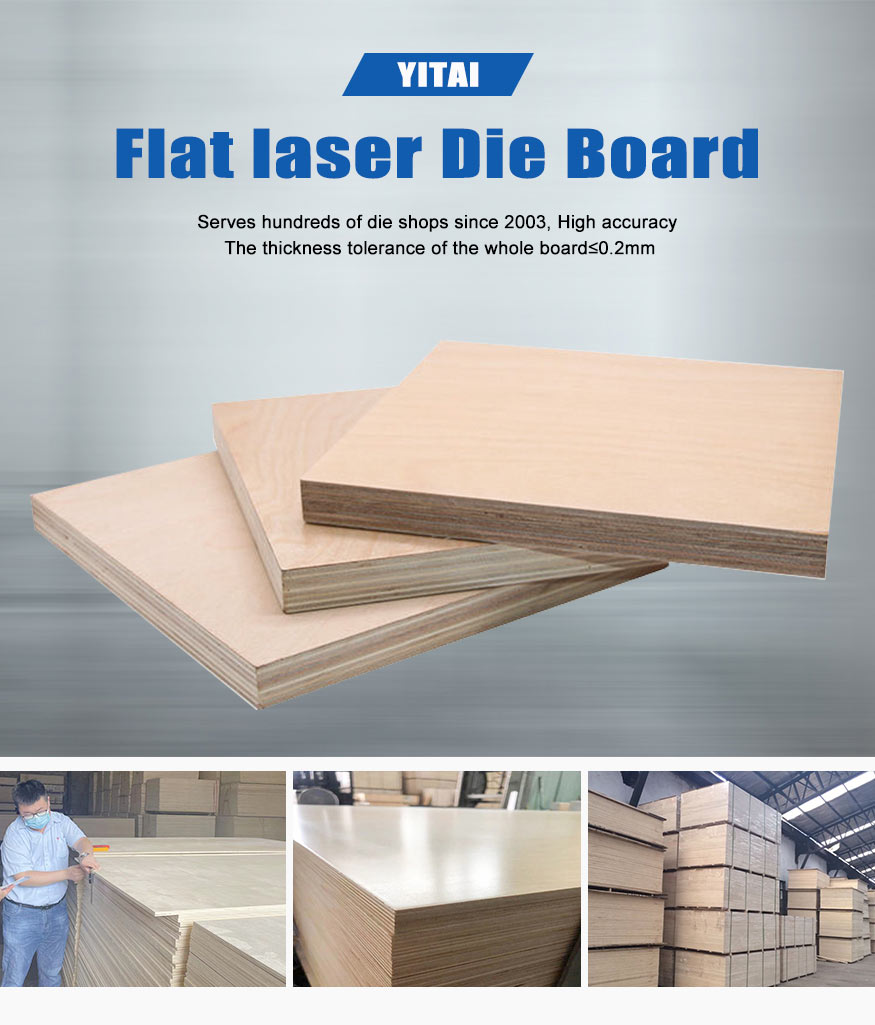
Yitai Flat Die Board
At YITAI, with over 40 years of die-making expertise and serving customers in more than 100 countries, we understand that the plywood board is not merely a consumable—it is the structural backbone of your die. A warped, delaminated, or inconsistently cut board will compromise even the most precisely bent steel rule, leading to poor cut quality, premature blade failure, and costly press downtime .
This guide will help die shops and packaging converters understand how to select the optimal die board plywood based on their specific production demands, substrate types, and expected die life.
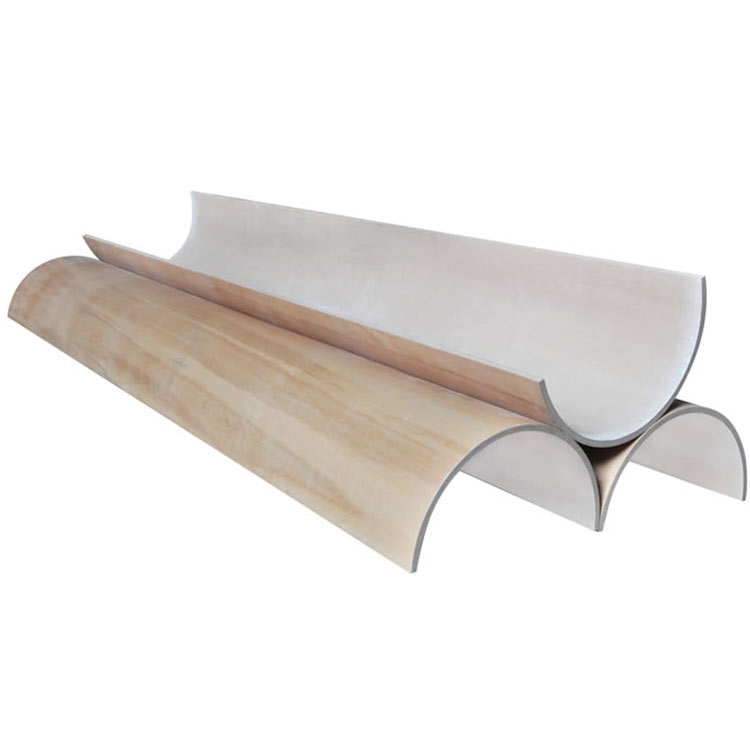
Rotary Die Board
Why Plywood? The Engineering Behind Die Boards
Plywood has remained the material of choice for die boards for decades because it offers an ideal combination of properties that metals and composites cannot match :
- Dimensional Stability: High-quality plywood resists expansion and contraction with humidity changes, maintaining critical groove tolerances
- Rule-Holding Ability: The layered construction grips steel rules firmly through friction alone
- Machinability: Plywood cuts cleanly with lasers, CNC routers, or jig saws without excessive tool wear
- Weight Reduction: Wooden boards are significantly lighter than metal counterparts, easing handling during die assembly and installation
- Cost-Effectiveness: When properly selected, plywood delivers the best balance of performance and value
However, not all plywood is created equal. The species of wood, number of plies, adhesive type, and manufacturing quality directly impact your die’s performance and longevity .
The Direct Link: Die Board Quality → Die Performance → Cut Quality
The relationship between your plywood die board and final cutting results is direct and measurable:
| Board Quality Factor | Impact on Die Performance | Result on Cut Quality |
|---|---|---|
| Thickness tolerance | Inconsistent rule height | Poor creasing, incomplete cuts |
| Flatness | Rule deflection, poor registration | Misaligned cuts, scrap |
| Ply adhesion | Delamination during routing/laser cutting | Failed boards, production delays |
| Moisture content | Warpage after manufacturing | Die rejection, press downtime |
| Density consistency | Variable rule holding strength | Loose rules, safety hazards |
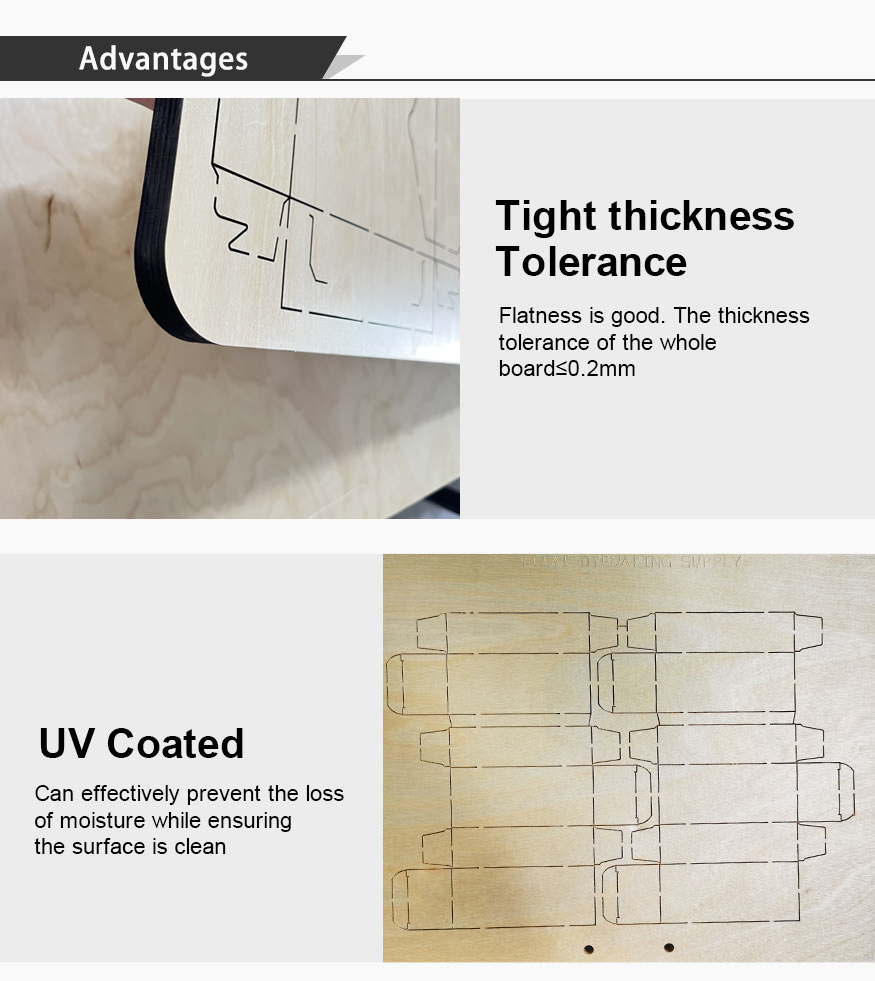
A die board with ±0.2mm thickness tolerance may seem acceptable, but when multiplied across a complex die with hundreds of rules, the cumulative effect destroys cut quality .
Species Selection: Matching Wood Properties to Production Demands
Different wood species offer distinct characteristics that make them suitable for specific applications. Understanding these differences is essential for optimizing die performance and cost.
Birch Plywood: The Premium Standard
Birch is widely regarded as the premier material for high-performance die boards, particularly for laser-cut applications .
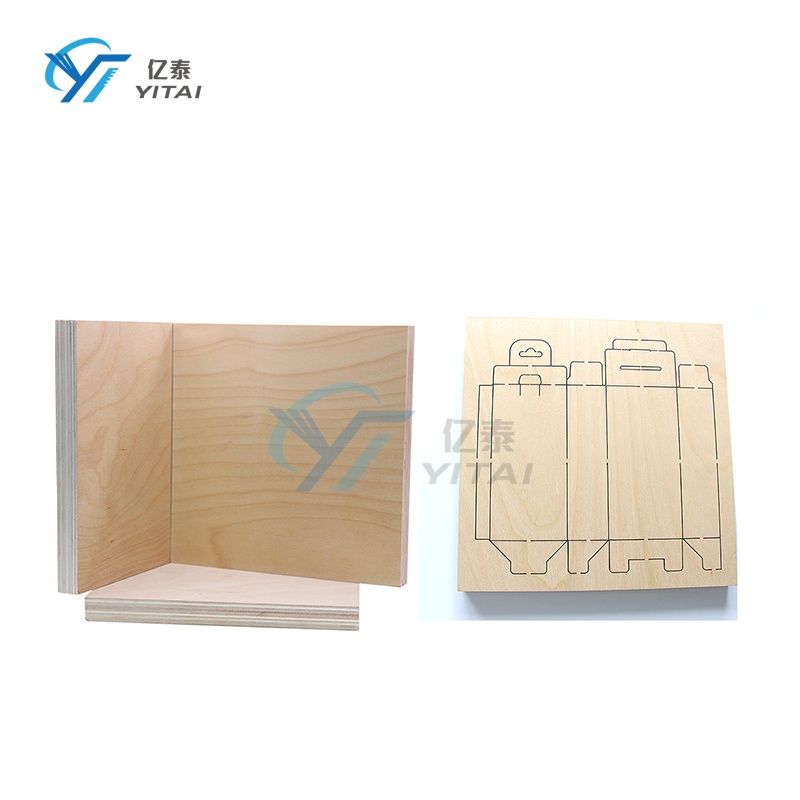
Full Birch Flat Die Plywood
Key Properties:
- High density and hardness for exceptional rule retention
- Fine, uniform grain structure for clean laser and CNC cuts
- Excellent dimensional stability in varying humidity
- Multiple thin plies (typically 13-15 for 18mm board) resist delamination
Ideal Applications:
- Long-run production dies (100,000+ cuts)
- Folding carton dies requiring precise creasing
- Laser-cut dies where edge quality is critical
- Complex designs with narrow bridges and tight tolerances
YITAI’s Birch Offering:
Our Russian birch plywood features 8-12% moisture content, FSC certification, and strict thickness tolerance of ±0.2mm . With 13-ply construction in 18mm boards, it delivers the stability required for high-volume packaging applications.
Beech Plywood: The Rotary Die Specialist
Beech offers similar density to birch but with unique characteristics that make it particularly suitable for rotary die applications .
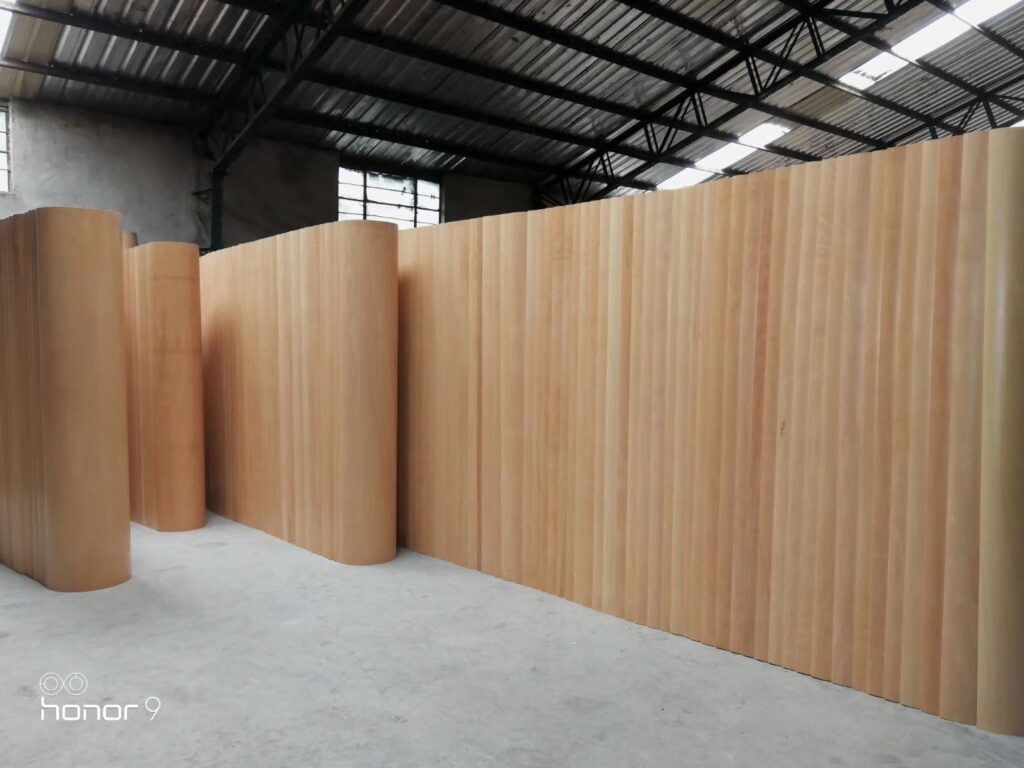
Rotary plywood for die making and packaging industry
Key Properties:
- High compressive strength for curved applications
- Excellent machinability for both laser and CNC routing
- Good screw-holding capacity for mounting hardware
- Consistent density across the board surface
Ideal Applications:
- Rotary dies for corrugated board conversion
- Curved dies requiring bending without fracture
- Applications requiring threaded inserts or hardware
YITAI’s Beech Offering:
Our 15mm rotary beech plywood is specifically engineered for 3-meter rotary dies, with BB/BB grade faces and moisture content carefully controlled to prevent warpage during curved mounting .
Poplar Plywood: The Cost-Effective Alternative
Poplar offers a budget-friendly option for applications where ultimate durability is not required .
Key Properties:
- Lower density reduces tool wear during cutting
- Good flatness when properly manufactured
- Acceptable laser-cutting characteristics
- Significantly lower cost than birch or beech
Ideal Applications:
- Short-run prototypes and sample dies
- Low-volume production (under 10,000 cuts)
- Secondary operations and manual adjustments
- Shops with frequent design changes
YITAI’s Poplar Offering:
Our white full-poplar flat die boards are manufactured in-house, ensuring consistent quality at competitive prices. Available in 12mm thickness for lighter applications .
Thickness Selection: Matching Board to Substrate
Industry standards provide clear guidance on matching die board thickness to the material being cut :
| Substrate Type | Typical Board Thickness | Application |
|---|---|---|
| Thin paper/foil (0.1-0.3mm) | 15mm | Labels, thin packaging |
| Folding carton (0.3-0.8mm) | 18mm | Standard cartons, cosmetic boxes |
| Micro-flute corrugated | 15mm | E-flute, F-flute packaging |
| Corrugated board (1-4mm) | 15mm | Shipping cartons, displays |
| Heavy-duty corrugated | 18mm+ | Double-wall, triple-wall board |
The 18mm thickness has become the global standard for folding carton applications, while 15mm is preferred for corrugated conversion to accommodate the compressed board height .
Rotary Die Board Considerations
Rotary die boards face unique demands that require specialized material properties :
Curved Stability
Rotary boards must bend to fit the cylinder drum without cracking or delaminating. This requires plywood manufactured with consistent density and high-quality adhesives that can withstand the bending stress.
Grain Orientation
The grain direction relative to the cylinder axis affects how the board behaves under rotational stress. Properly manufactured rotary boards account for this in their layup.
Precision Machining
Rotary die boards must be precisely cut to match the cylinder diameter. Even minor deviations create registration issues during high-speed cutting .
YITAI’s rotary die boards are engineered specifically for these demands, with thickness options from 13-15mm and lengths up to 3 meters .
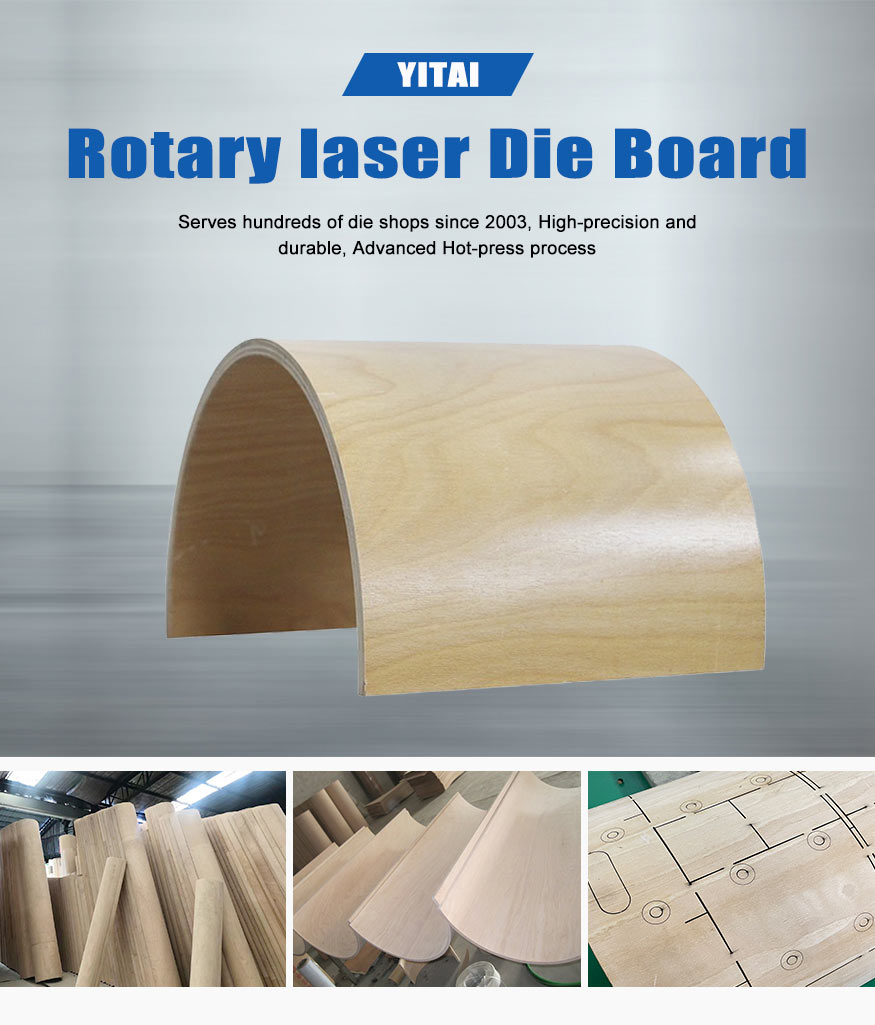
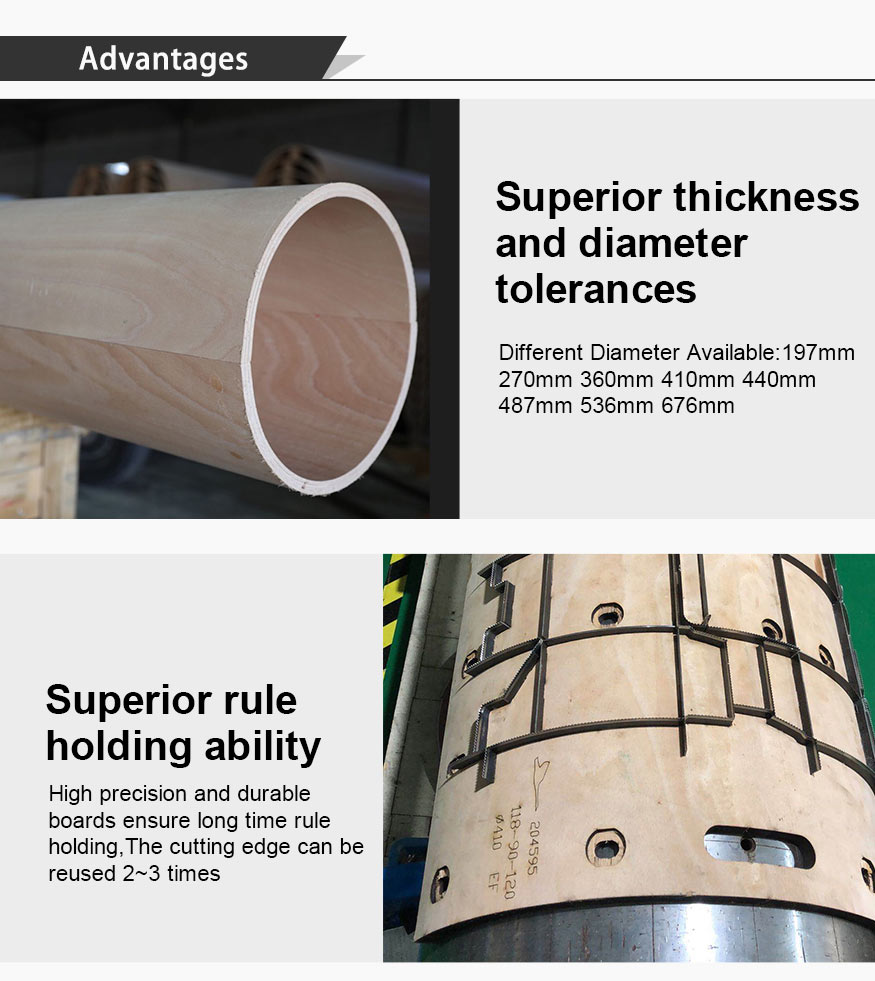
Quality Indicators: What Die Makers Should Look For
When evaluating die board suppliers, experienced die makers examine several critical factors:
1. Moisture Content Control
The ideal moisture range for die boards is 8-12% . Boards outside this range will warp after cutting or in service, destroying die accuracy.
2. Thickness Tolerance
Premium boards maintain ±0.1-0.2mm thickness consistency . Variations beyond this require compensatory adjustments that compromise quality.
3. Ply Count and Construction
For a given thickness, more plies generally indicate higher quality. An 18mm board should have at least 13 plies for adequate stability .
4. Adhesive Quality
Waterproof or highly water-resistant adhesives (WBP grade) prevent delamination during storage and in high-humidity environments.
5. Surface Grade
Faces should be free of knots, voids, and patches that create weak points or interfere with rule placement. BB/BB grade or better is recommended for production dies .
6. Certification
FSC certification ensures sustainable sourcing and consistent quality control .
Application-Based Selection Guide
Use this guide to match die board selection to your specific production scenario:
Scenario A: High-Volume Folding Carton Producer
Requirements: 500,000+ cuts per die, complex designs, tight tolerances
Recommended Board: 18mm Russian birch plywood, BB/BB grade, 13+ plies
Why: Maximum rule retention, laser-cut edge quality, dimensional stability through long runs
Scenario B: Corrugated Packaging Specialist
Requirements: High-speed rotary dies, moderate runs, variable board grades
Recommended Board: 15mm beech rotary plywood or 15mm birch for premium applications
Why: Curved stability, compressive strength for corrugated compression, consistent density
Scenario C: Prototyping and Short-Run Shop
Requirements: Frequent design changes, low volume per design, cost sensitivity
Recommended Board: 18mm poplar plywood or entry-level birch
Why: Lower material cost, acceptable performance for limited runs, easy machining
Scenario D: Heavy-Duty Industrial Packaging
Requirements: Thick substrates, abrasive materials, extreme runs
Recommended Board: 18-25mm premium birch or specialized high-density boards
Why: Maximum durability, resistance to wear, structural integrity
The YITAI Advantage: Factory-Direct Quality and Expertise
As a leading China die-making machinery manufacturer with factory-direct supply, YITAI offers distinct advantages to die shops and material distributors worldwide :
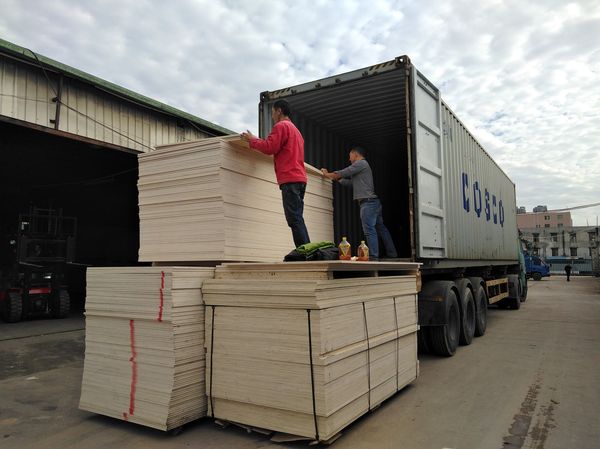
Yitai Die Board Plywood Loading
Complete Supply Chain Control
We manufacture our die boards in our own facilities, ensuring consistent quality from log selection to finished board. This vertical integration eliminates the variability of third-party sourcing.
Engineered for Die-Making
Our boards are specifically formulated for die-making applications, not repurposed construction plywood. Every parameter—from adhesive formulation to pressing cycle—is optimized for laser cutting and rule retention.
Comprehensive Product Range
- Flat die boards: 12mm, 15mm, 18mm in birch, beech, and poplar
- Rotary die boards: 13mm, 15mm for cylinders up to 3 meters
- Custom thicknesses and sizes available for volume orders
Global Quality Standards
- FSC certification for sustainable sourcing
- CE-certified manufacturing processes
- Strict QC with in-process and final inspections
- Moisture content testing on every batch
Distributor Support
For die-making material distributors, we offer:
- Competitive OEM/private labeling options
- Consistent quality across production batches
- Reliable supply with 7-30 day delivery
- Technical support for your customers’ applications
Storage and Handling Best Practices
Even the highest-quality die board will perform poorly if improperly stored. Follow these guidelines to maintain board quality:
- Climate Control: Store boards at 18-22°C with 45-55% relative humidity
- Flat Storage: Stack boards on a flat, level surface with uniform support
- Rotation: Use oldest stock first (FIFO inventory management)
- Acclimation: Allow boards to acclimate to your workshop environment for 48-72 hours before cutting
- Protection: Keep boards covered and protected from direct sunlight and moisture sources
Conclusion: Invest in the Foundation
The plywood die board is the foundation upon which every successful die is built. Skimping on board quality to save pennies per die inevitably leads to pounds of lost revenue through rejected jobs, premature die failure, and unhappy customers .
At YITAI, we believe in providing die makers with the quality foundation they deserve. Our 40+ years of industry experience have taught us that when die makers start with superior materials, their craftsmanship shines through in every die they produce .
Whether you need premium birch for high-volume production, specialized beech for rotary applications, or cost-effective poplar for prototyping, YITAI delivers factory-direct quality with the consistency and reliability that professional die makers demand.
Contact Our Material Specialists
Not sure which die board plywood is right for your application? Our technical team can help you select the optimal material based on:
- Your typical production volumes
- The substrates you cut most frequently
- Your equipment (laser, CNC, or manual)
- Your climate and storage conditions
Email: sales_diemaking@yitaipacking.com
WhatsApp: +86 15806261086
Office: No. 191, Huangpujiang(S) Road, Kunshan City, Jiangsu Province, China
YITAI: Complete Die-Making Solutions from One Trusted Source