An auto blade bending machine has become essential equipment in modern die-making workshops. With higher efficiency, stable accuracy, and lower labor costs, it is widely used for processing cutting rules and creasing rules.
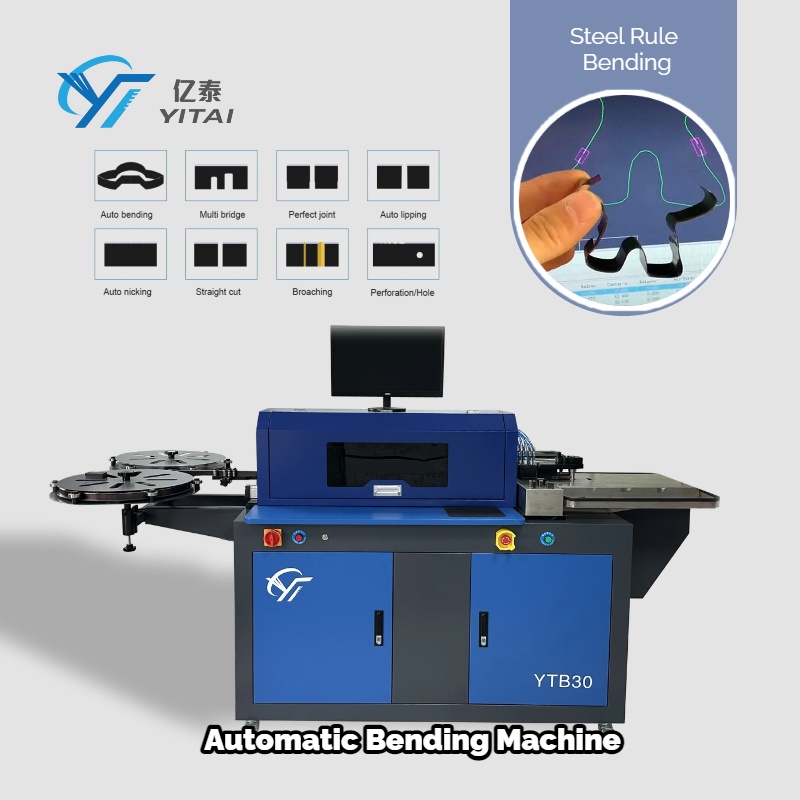
However, with many models available on the market, how do you choose the right one for your production needs?
Here is a practical guide to help you select the most suitable machine based on product type, production capacity, and precision requirements.
1. Choose Based on the Products You Produce
The first and most important factor is the type of cutting dies you manufacture.
Ask yourself:
- What materials do you mainly process? (mild steel rule, stainless steel rule, aluminum rule, etc.)
- What is the maximum blade height and thickness?
- What is the maximum bending length?
- Do you process complex small-radius shapes?
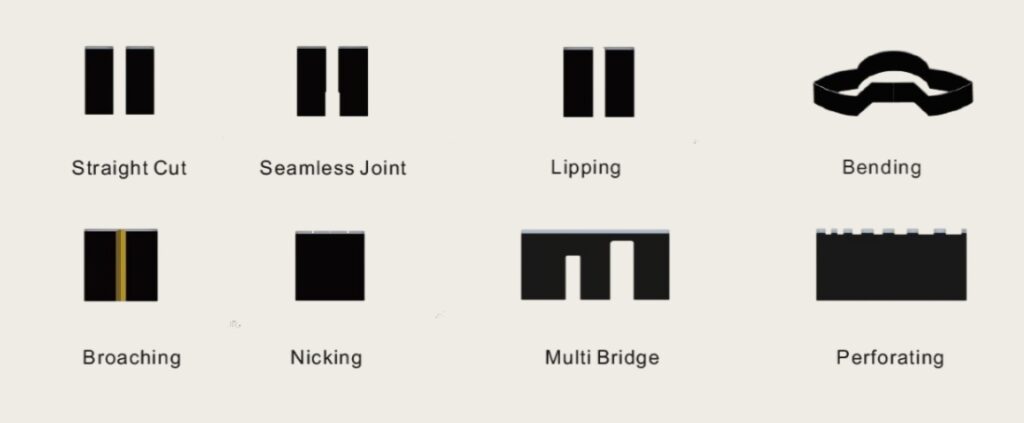
Your goal should be to select a machine that:
- Meets your maximum processing requirement
- Avoids oversizing and unnecessary cost
- Handles your most common jobs efficiently
For example:
- If most of your dies are small carton boxes with thin cutting rules, a standard precision model is sufficient.
- If you frequently produce large-format or heavy-duty industrial dies, a higher-tonnage, stronger-structure model is recommended.
Choosing according to actual production needs ensures better ROI and avoids over-investment.
2. Choose According to Production Volume and Efficiency Needs
Production volume directly impacts the type of machine you should select.
When output is high and batch sizes are frequent:
- A fully automatic blade bending machine significantly reduces manual adjustment time
- Shorter machines generally have less deflection and require fewer corrections
- Reduced setup time means higher daily productivity
Material grade also affects performance:
- Stainless steel rules require approximately 50% more load compared to mild steel
- Soft aluminum rules may require about 50% less load
Always request the tonnage and material compatibility chart from the manufacturer before purchasing.
If your factory focuses on:
- Short-run customized packaging → flexibility and quick mold loading are critical
- Mass production of standard dies → speed and repeatability are more important
3. Choose Based on Precision Requirements
Precision is a decisive factor.
If your production requires:
- Bending accuracy within ±1°
- High repeatability for complex shapes
- Consistent blade height and angle
Then a CNC auto blade bending machine is strongly recommended.
Typical comparison:
| Machine Type | Slide Repeatability | Angle Deviation |
|---|---|---|
| Auto Blade Bender | ±0.0004 inch | ±1° |
| Manual Bender | ±0.002 inch | ±2°–3° |
For high-end packaging, electronics, cosmetic boxes, and precision die-making, automatic machines ensure consistent forming quality and reduce rework.
Additionally, automatic blade bending machines support:
- Quick mold loading
- Digital control
- Small batch fast switching
This makes them ideal for modern flexible production.
4. Consider Long-Term Stability and Brand Support
A bending machine is a long-term investment. Besides specifications, consider:
- Mechanical structure stability
- Software compatibility
- Spare parts availability
- After-sales technical support
- Remote assistance capability
Reliable manufacturers provide not only machines, but also long-term service support and technical upgrades.
Choose a Trusted Manufacturer
With over ten years of experience in developing electric blade bending machines, Yitai Precision Machinery is recognized as a leading national brand in China’s automatic die-making equipment industry.
We are committed to delivering:
- Stable and high-precision machines
- Intelligent control systems
- Reliable after-sales service
- Continuous technical innovation
When you invest in a Yitai auto blade bending machine, you invest in efficiency, precision, and long-term stability.