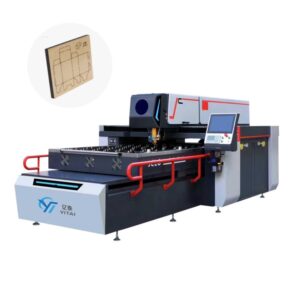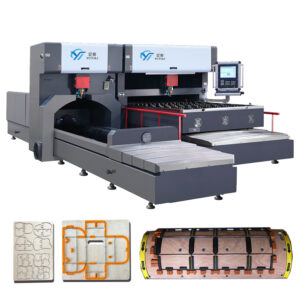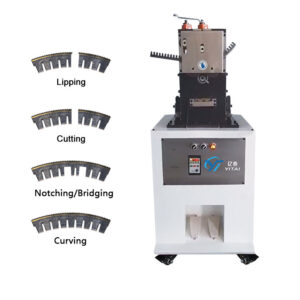
A Mechanical Advantage for Die Board Laser Cutting Machines
In a die board laser cutting machine, most people focus on laser power, tube quality, or software precision.
However, in real production, the mechanical transmission system — especially the ball screw and linear guide rail — plays an equally critical role in cutting accuracy.
For plywood laser cutter applications, where wood dust is unavoidable, maintaining stable mechanical precision becomes even more challenging.
This is why the Ball Screw Soak-with-Oil Design significantly improves the performance and long-term accuracy of a wooden die laser machine.
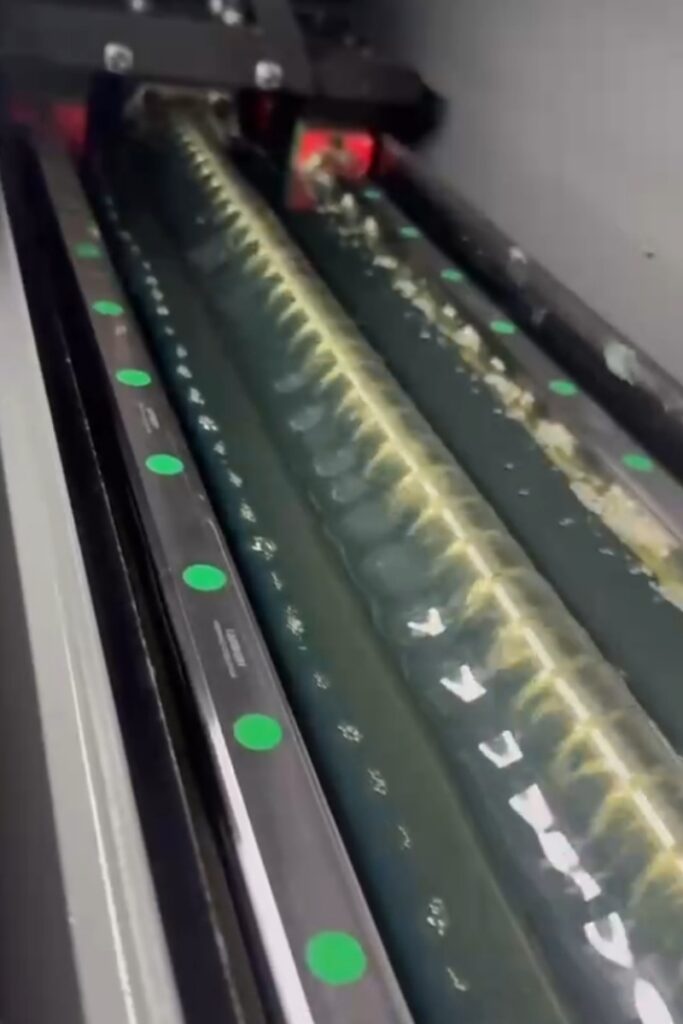
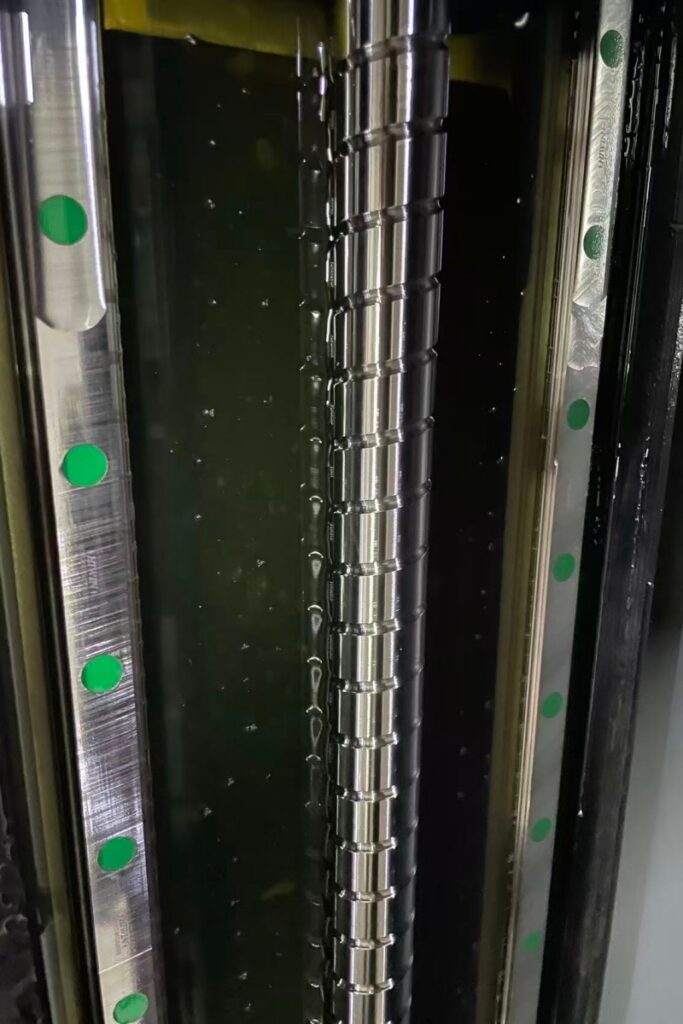
The Relationship Between Ball Screw and Cutting Accuracy
The ball screw converts rotary motion into precise linear motion.
In a die board laser cutting machine, it directly controls:
- X/Y axis positioning
- Movement smoothness
- Slot consistency
- Repeat positioning accuracy
If the ball screw experiences:
- Friction increase
- Micro vibration
- Lubrication instability
- Wear or backlash
Then cutting accuracy will gradually decline.
Even if the laser beam is perfectly aligned, unstable mechanical transmission will still cause:
- Slot deviation
- Uneven cutting depth
- Misalignment in repeated jobs
Mechanical precision is the foundation of laser precision.
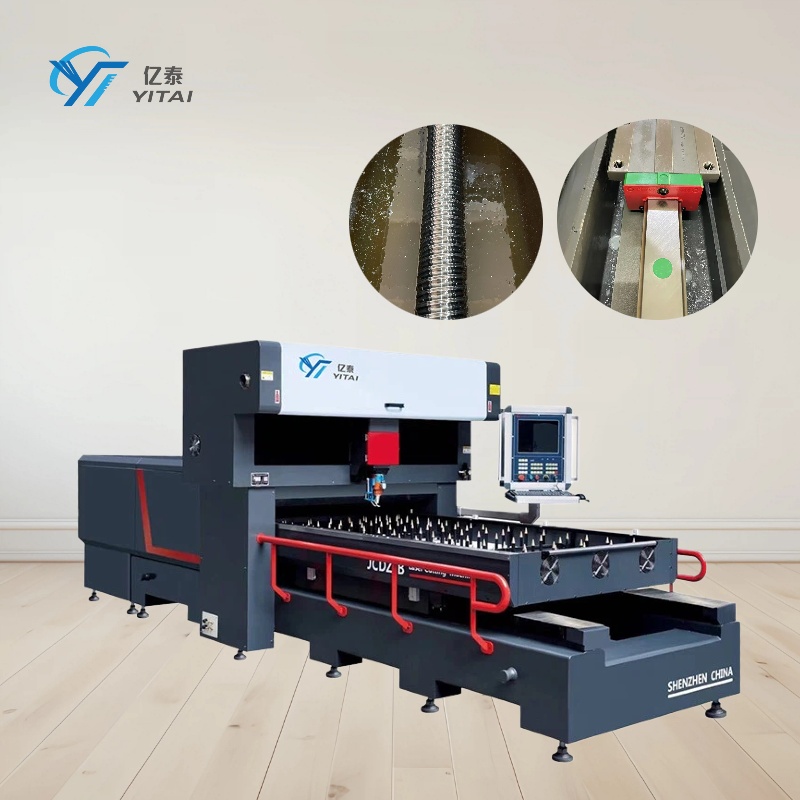
The Problem with Traditional Lubrication Methods
In conventional plywood laser cutters, lubrication is usually:
- Surface grease application
- Periodic manual oiling
Over time, especially in dusty environments:
- Grease mixes with wood dust
- Lubrication becomes uneven
- Dry spots develop
- Friction increases
This leads to:
- Axis vibration
- Reduced motion stability
- Faster wear of the ball screw
For wooden die laser machines working continuously, this is a common cause of precision loss.
How Ball Screw Soak-with-Oil Design Works
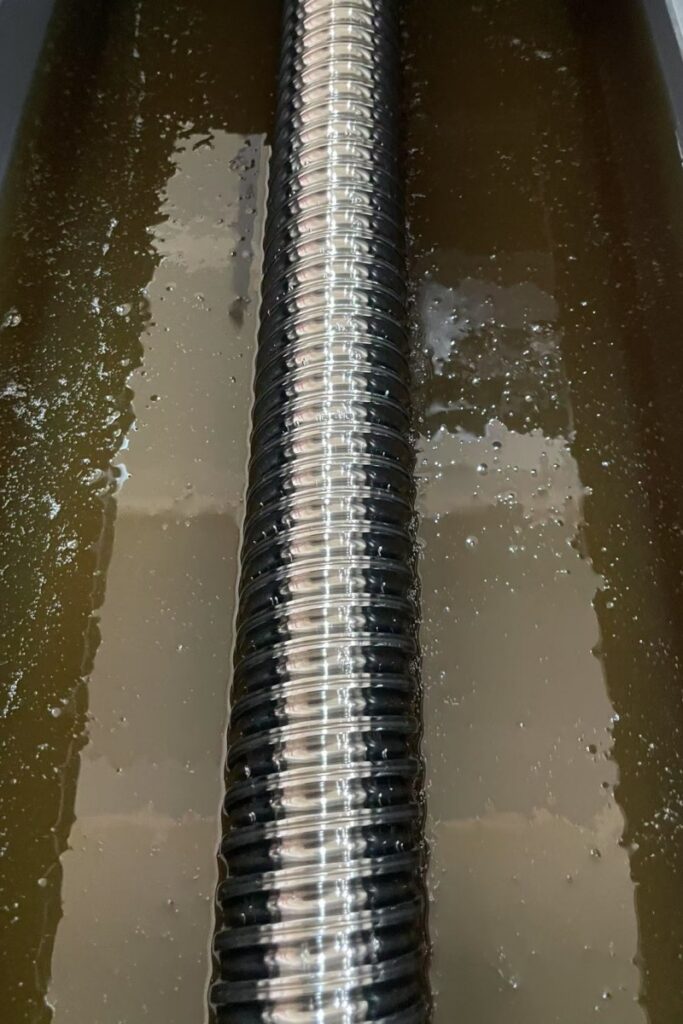
The Ball Screw Soak-with-Oil system is designed to ensure continuous and stable lubrication.
Instead of relying only on external grease, the ball screw is:
- Constantly supplied with controlled oil contact
- Protected by a stable lubrication film
- Less exposed to dry friction
This design helps maintain consistent movement performance even in heavy production environments.
Why It Improves Accuracy
1. Reduced Friction Fluctuation
Stable oil film reduces sudden resistance changes.
Result:
- Smoother axis movement
- More consistent positioning
2. Lower Micro Vibration
Dry or uneven lubrication often causes micro vibration.
Oil soaking minimizes mechanical oscillation, which helps maintain:
- Clean slot lines
- Stable laser path
3. Reduced Backlash Over Time
Wear between ball screw and nut creates backlash.
Consistent lubrication slows wear progression, helping maintain:
- Long-term repeat positioning accuracy
- Stable cutting quality over months or years
4. Better Performance in Dusty Environments
In plywood laser cutter operations:
- Wood dust is unavoidable
- Resin particles stick to components
Oil film provides a protective barrier, reducing dust adhesion and surface corrosion.
5. Long-Term Benefits for Die Making Factories
For wooden die laser machine users, the soak-with-oil design provides:
- More stable slot width control
- Reduced maintenance frequency
- Longer mechanical lifespan
- Lower long-term replacement cost
When producing high-precision die boards, mechanical stability directly affects:
- Rule fitting accuracy
- Die performance consistency
- Customer satisfaction
6.Laser Power Alone Is Not Enough
Many buyers compare:
- 400W vs 600W laser power
- Tube brand
- Control system
But mechanical structure determines whether that power can be used accurately.
A powerful laser without stable transmission is like:
A high-performance engine with a worn-out gearbox.
Precision depends on both optical and mechanical systems.
Final Conclusion
The Ball Screw Soak-with-Oil Design improves laser cutter accuracy because it:
- Stabilizes lubrication
- Reduces friction and vibration
- Slows wear progression
- Maintains long-term positioning precision
For any die board laser cutting machine operating in plywood environments, mechanical protection is essential for sustainable accuracy.
When evaluating a plywood laser cutter or wooden die laser machine, mechanical transmission design should be considered as carefully as laser specifications.